
“Peppergrass is the name of a spicy plant and the main character…” begins ‘Peppergrass’ co-director Steven Garbas in our wonderful 1:1 chat with the talented filmmaker, whose film makes a splash on digital platforms today, June 16, after achieving success on the festival circuit.
Question (Q): Congrats on the new film! What does the title refer to? Or is that giving it all away?
Steven Garbas (SG): Thank you!
‘Peppergrass’ is the name of a spicy plant and the main character, Eula’s, restaurant in the film. It grew in the corners of its parking lot and, according to legend, was used in their first hot sauces. But the plant has some third act significance to our leading lady…
Q: And this is your sophomore film I believe? What did you learn on that first film that you applied here?
SG: My first film was a bizarro, avant-garde thing starring Eric Roberts and bunch of bartenders I knew. It ended with an 18-minute montage of a motel torture sequence, a university lecture, a 1998 ping-pong match, and footage of the My Lai Massacre.
I learned that weird isn’t always good. And can often be astonishingly bad.
Q: Where did the interest in this particular story come from?
SG: I know a botany professor in Montreal, real counter culture vulture; quotes ‘Trout Mask Replica,’ haswalls of books no one’s ever heard of. I used to live in the apartment where that Luka Magnotta guy left a dismembered corpse, and the professor was my neighbour. Anyway, he came over one night and was telling me about how competitive/violent truffle hunts can be.
And with the torso in the suitcase out back under the loading dock (and the howling illegal dog breeder next door), it felt like something from the horror genre in my head.
Q: How long ago did the process of developing the film kick off?
SG: I had the ideafor like 10 years. But I only wrote the script in June 2020, went to camera in November. So very quick.
Q: What do you shoot on? It looks gorgeous…
SG: Thank you!
We shot on the Arri Alexa with vintage K35s. We colored it at C3 in LA.
Q: And was the movie shot in your back of the woods?
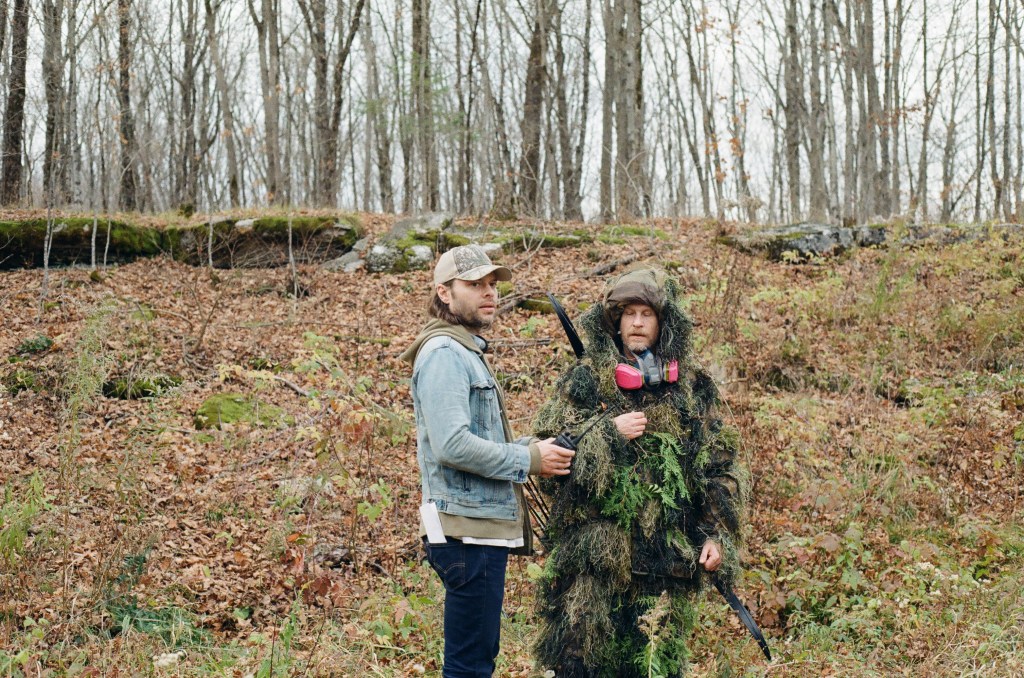
SG: We had access to an old barn and cabin a couple hours north of Toronto. But there wasn’t a road, so we decided to build one. Five miles of twisting old wagon paths and fresh stumps.
But the rains kept washing it out; we had to hire someone to just keep pouring gravel every day. Ended up with about 10 tonnes of stones.
We destroyed everyproduction vehicle on that damn road. Literally. Two production vans, three trucks, and a couple of personal vehicles.
One day we were driving in and there was an abandoned F150 floating in the swamp beside the road. After that, we had a bobcat with excavator tracks escort the trucks in.
Q: Tell us some of the horror flicks you admire, and of course, ones that influenced your choices here.
SG: I’m really into the ‘70s, slow cook films. ‘Don’t Look Now,’ ‘The Girl Who Lives Down the Lane,’even ‘The Shining’has a pretty agonized pace to it. I like that the formula isn’t quite ready in that era, the beats aren’t all timed out. It works to sort of subvert the pattern of the genre (mainly because the pattern isn’t established just yet.) Peter Medak’s ‘The Changling’is probably my favorite. Eastern European directors have masterful opening acts in 1980.
I also go for ‘60s psychological breakdown thrillers: the telephone coming from inside the house is really inside your head. ‘Repulsion’is a standout. ‘Eyes With a Face,’‘Persona, Hush Hush’…‘Sweet Charlotte.’Joseph Losey’s ‘The Servant’is another great film where the story builds from a foundation that keeps collapsing for the viewer. I always love when that’s done well.
‘Peppergrass’ influences were cherry picked over a few genres. It’s a heist setup done with a horror brush in the first act, very ‘Thief,’ very ‘Bellman and True.’I was trying to do a survivalist horror version of Bresson’s ‘A Man Escaped’in the second act. The third I’ll just say I stole the ending from Kubrick’s ‘The Killing.’Sort of. The vibe at least.
Q: Let’s talk a little about lighting. It’s obviously super important to you. Can you discuss?
SG: Lighting is everything in this genre. And since I wanted to play with the format, I needed that undercurrent of malevolence purling throughout the film. That meant black, to simplify.
I looked hard for a DP who liked to shoot dark. Like, very dark. And I found Grant Cooper. High contrast, noir-y, shadow, miles of rich blacks punctuated with reds and orange, then a steel blue moon. His eye was perfect for this. (He just won a CSC award for Best Cinematography for ‘Peppergrass’last month actually.)
We built a “moonbox” and put it up 50 ft on a scissor lift and used that to approximate our moon. It almost rolled off a cliff one night.
Q: People will discover this film over the summer on streaming platforms. Have you discovered any good horror gems on streaming lately?
Not a true horror film but Bryan Forbes’ ‘Seance on a Wet Afternoon’is one of my favorite films of all time. Kim Stanley’s only leading role in a feature film, and she is electrifying. I can’t say enough about her performance.
Donald Cammel’s ‘White of the Eye’ is the gem I found this summer on Criterion. Just vibrating with creativity. Cathy Moriaty has one of the all-time best interrogation room scenes in it. It’s so blistering.
 Film Factual