
Barbie
Warner Bros. Pictures
Director: Greta Gerwig
Writer: Greta Gerwig and Noah Baumbach
Cast: Margot Robbie, Ryan Gosling, America Ferrera, Kate McKinnon, Issa Rae and Will Ferrell
Opens: July 21, 2023
Screened at: AMC Empire 25, New York City, NY, 7/19/23
Taking a fun, relaxing stroll to Barbie’s Dreamhouse is ultimately proving to be a more insightful trip for the girls and women who grew up playing with her – and for the doll herself – than they ever could have imagined. Oscar-nominated filmmaker Greta Gerwig daringly pulls back the glossy gleam of the popular Mattel doll, which has been inspiring – and causing ire – amongst American society for over 60 years, particularly over its often-times conflicting messages on women’s worth and image, in her new fantasy comedy, ‘Barbie.’
The new project, which Warner Bros. Pictures is releasing in theaters tomorrow, July 21, serves as Gerwig’s third helming effect. She received an Oscar nomination for Best Director for the 2017 coming-of-age comedy-drama, ‘Lady Bird,’ and also helmed the 2019 coming-of-age period drama, ‘Little Women.’ She also co-wrote the new comedy with her partner, Noah Baumbach.
‘Barbie’ chronicles the struggles that both the titular doll faces in her hometown, Barbieland, which is set in an alternate reality, and girls and women contend with in the Real World. The titular protagonist, Stereotypical Barbie (Margot Robbie), has always enjoyed the life she leads in her Dreamhouse, and doesn’t question the positive message that Mattel has been selling American girls since it introduced the doll in 1959.
Every day when Stereotypical Barbie wakes up in Barbieland, the other positive-minded dolls, including President Barbie (Issa Rae), Dr. Barbie (Hari Nef), Writer Barbie (Alexandra Shipp), Lawyer Barbie (Sharon Rooney), Mermaid Barbie (Dua Lipa) and Journalist Barbie (Ritu Aryu), all smile and wave to one another, as they get ready for another day.
While the blond-haired, fair-skinned Stereotypical Barbie happily embraces the fact that she’s just another doll, she soon begins to suspect that there’s a major disconnect between Barbie inventor Ruth Handler’s best intentions and the state of things in the Real World. While Barbie believes that the doll line has helped solve all problems of feminism and equal rights in the Real World, she unexpectedly begins to be riddled with anxiety over some of humanity’s biggest problems.
One evening, in the middle of a dance party, Barbie begins being plagued by concern over dying. The next morning, she’s horrified to discover that her normally high-heeled feet have flattened, and a patch of cellulite has appeared on her leg.
In order to uncover the existential thoughts and problem that have started threatening her near-perfect physique, Barbie seeks guidance from Weird Barbie (Kate McKinnon), a doll whose traumatic history of being played with too hard by her human girl owner has turned her into the kingdom’s scholar.
Weird Barbie informs Stereotypical Barbie that the answer lies in the Real World. as a result, she must travel there in order to find the girl who’s playing with her and figure out what’s triggering her change in emotions. Her longtime admirer and casual boyfriend, Ken (Ryan Gosling), who wishes to form a more meaningful romantic relationship with her, decides to accompany her to the Real World in order to help and impress her.
Once the duo arrives in Los Angeles in the Real World, the executives at Mattel’s corporate headquarters, including its CEO (Will Ferrell), are determined to send them back to Barbieland and keep her existence hidden from humanity. While Barbie is driven to fight back against the executives as she starts to realize that girls and women aren’t as inspired by Barbie as she previously believed, working mom Gloria (America Ferrara), who holds an entry-level job at Mattel, wants to reconnect with her pre-teen daughter, Sasha (Ariana Greenblatt). The two have grown apart since the middle schooler lost interest in playing with her Barbie dolls. In order to restore order to both the Real World and Barbieland, Stereotypical Barbie, Gloria and Sasha must find a way to work together and reconnect, before their worlds – and identities – are completely changed forever.
Much like with ‘Lady Bird,’ Gerwig disrupts the unattainable standards that America has placed on women, in both their professional and personal lives throughout ‘Barbie.’ With the filmmaker’s contemplative storyline and thought-provoking character development of the titular doll paired perfectly with Robbie’s superb personification of Stereotypical Barbie throughout her journey to break modern archetypes, the new fantasy comedy is a surprising addition to the female empowerment genre.
Barbie finds the encouragement that she needs to lead the feminist movement in both Barbieland and the Real World with the inspirational message she receives from the most startling place – Sasha. The young character’s adolescent angst, particularly her growing displeasure with her mother’s actions, prove to be the motivation that Barbie needs to realize that the doll line’s idealized design can actually cause more harm to their self-esteem than inspiration to young girls.
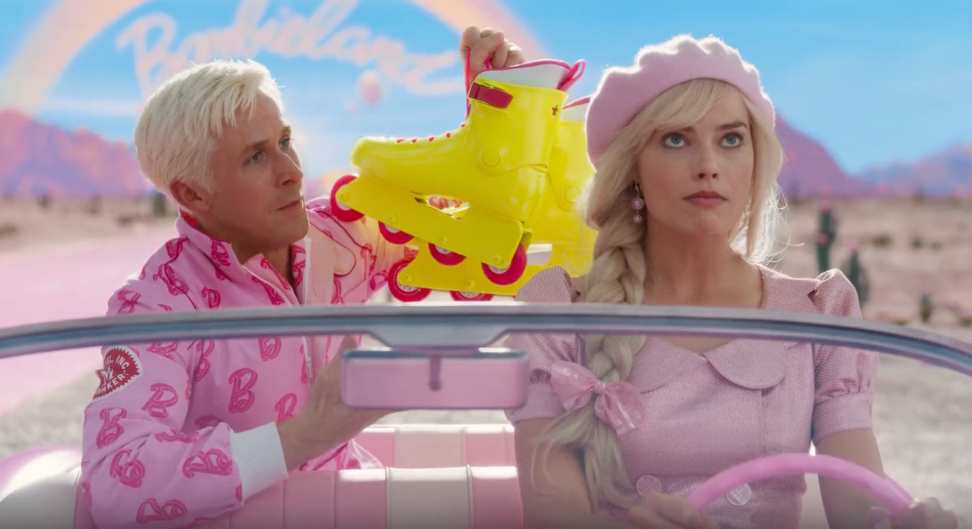
Besides Gerwig’s expert exploration into the contradictions that Barbie dolls thrive on – that girls can achieve whatever goals they desire, as long as those aspirations are approved by society, and the girls always look perfect while doing so – ‘Barbie’ also thrives on its visual production details. Sarah Greenwood’s awe-inspiring production design, particularly in Barbieland, offers a unique blend of magenta and blush in its Hreamhouses, cars, stores and even government building.
In certain ways, ‘Barbie’ builds on themes Gerwig explored in her previous movies as a writer and director, particularly ‘Lady Bird.’ Her new fantasy comedy successfully explores the complicated journey of self-definition and the unpredictable but loving relationships between not only friends, but also mothers and daughters. The filmmaker’s skilled writing, combined with Robbie’s natural performance as the titular character, allows the audience to ponder how women can break free from being trapped in a category-obsessed culture, as well as the psychological effects of societal pressures.
Story: B+
Acting: B+
Technical: A–
Overall: B+
 Film Factual