
The whimsical exploits of the elite that many strive to emulate can ultimately jeopardize a country’s hope for securing financial stability. Malaysia is one such developing nation whose economy has been marred recently by a corrupt group of co-conspirators who orchestrated a scheme to financially exploit the public for their own personal gain. That plan is explored in the upcoming crime feature documentary, ‘Man on the Run.’
Netflix is set to globally premiere the film this Friday, January 5. The movie was written, directed and executive produced by Cassius Michael Kim (‘Stockton on My Mind,’ ‘The Wonder List’).
‘Man on the Run’ follows the illegal adventures of the enigmatic Low Taek Jho – known to most as Jho Low – a mysterious businessman and playboy. Working with former Prime Minister Najib Razak of Malaysia, Low orchestrated a scheme to exploit 1MDB, a sovereign wealth fund established in 2009 with the noble purpose of benefiting the people of Malaysia.
In 2015, the intrepid journalist Clare Rewcastle-Brown received leaked financial documents. The revelation of those documents set off a global investigation that uncovered a staggering amount of money being funneled into international bank accounts to fuel Low’s extravagant lifestyle. Among other things, he acquired lavish properties, a private jet, a super-yacht, while also partying with A-list celebrities like Leonardo DiCaprio and dating supermodel Miranda Kerr. Dubbed the Asian Great Gatsby, Jho Low even financed Martin Scorcese’s 2013 Oscar-nominated film, ‘The Wolf of Wall Street,’ which stars DiCaprio.
Low now faces charges of money laundering and a slew of other offenses related to the multibillion-dollar scandal. The disgraced financier, who’s wanted by international authorities, is on the run and believed to be hiding in China.
Through Kim’s unprecedented access to key individuals involved on both sides of the story and their gripping first-person accounts, the documentary exposes a complex web of greed and corruption. Currently jailed former Prime Minister Najib Razak, 1MDB whistleblower Xavier André Justo and Rewcastle Brown are featured in the film. The helmer’s meticulous investigation lays bare the extensive repercussions of one of the most colossal financial scandals in history.
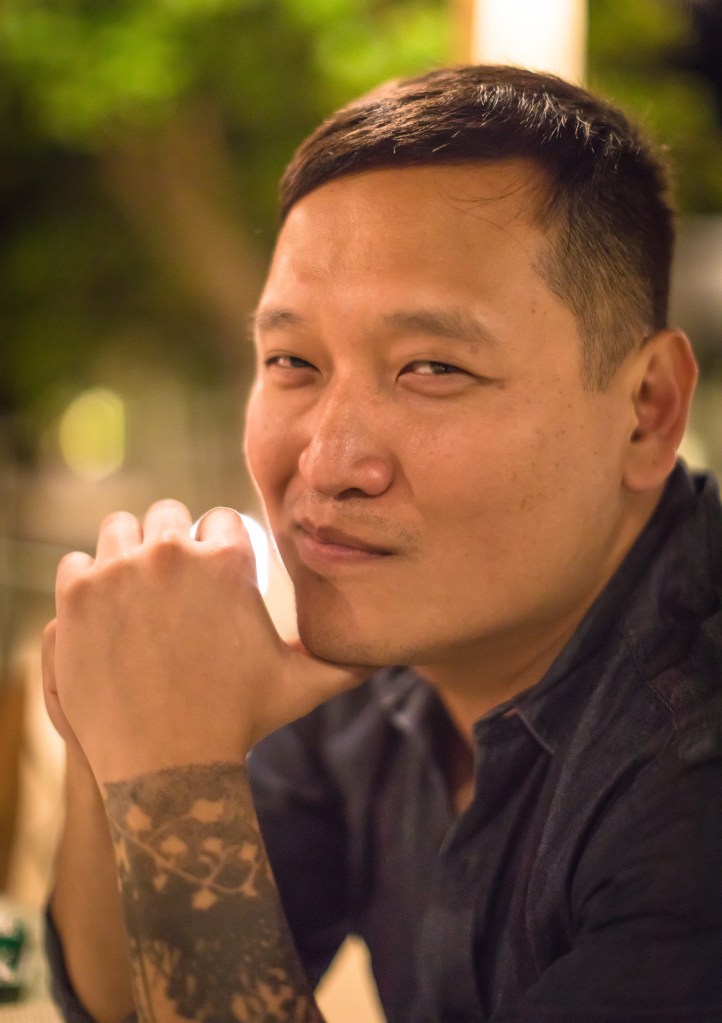
Kim generously took the time recently to talk about directing and producing ‘Man on the Run.’ Among other things, he discussed his inspiration behind making the movie; why he felt it was important to feature as many people who were directly involved in the financial scandal in the documentary as possible to share their first-hand accounts of the conspiracy; and why he’s grateful the film is set to stream around the world on Netflix.
The conversation began with Kim explaining why he was inspired to make ‘Man on the Run,’ and how the project got started. “I think the biggest thing is that the story itself is so peculiar. It spans the entirety of the globe, as well as aspects of society that people are familiar with, like Hollywood, Wall Street and international politics,” he noted.
“Despite the involvement of these crazy entities, the awareness of the story is so low in America. When I was putting the team together, it really struck me that we had a team of producers who are all experienced journalists, but none of them were familiar with this story in the extent that they needed to be,” the filmmaker revealed.
“Some of them heard about parts of the story because there are so many different parts to it. So that was proof to me that this story needed to be told in a larger setting, especially since so many of those who were involved haven’t been held accountable. I think that’s a dream scenario for a documentary,” Kim admitted.
As the filmmaker then began working on the feature, he did extensive research into Low’s collaboration with Najib Razak as their scheme unfolded. “Well, you start from the beginning. Initially, I heavily turned to the book, ‘Billion Dollar Whale,’ by Bradley Hope and Tom Wright. Bradley’s featured in the film and has been a great help throughout the entire project,” he shared.
“After we read the book and absorbed the broad overview of the story, we start talking to the people who were involved. We talked to many people, including Clare Rewcastle Brown, Xavier André Justo, Ho Kay Tat and Tony Pua,” Kim shared.
“It was very important to get the word directly from the people involved, especially on the Malaysian side. Speaking to law enforcement officers, like Bill McMurry, was also so important. We appreciated his willingness to speak in the film. We also appreciated his willingness to introduce us to people in his orbit who were involved in the investigation but haven’t spoken to the press before,” the filmmaker divulged.
“We then started to learn the intricacies of what happened behind the scenes, under all the glitz and glamour,” Kim recalled.
“We then had to start learning about Malaysia. Before I made this film, I wasn’t super familiar with the country of Malaysia. So I thought it was very important to take a crash course on the history of Malaysia and the structure of its politics, and what made the conditions so ripe for a scandal like this to take place. So those were the first steps,” the filmmaker added.
Kim then delved into how in addition to writing ‘Man on the Run,’ he also directed the project, and what his overall helming approach was like throughout the production. “The first thing was to go speak to these people about what happened. We set aside all of the materials and then rebuilt the story from the ground from the conversations,” he shared.
“That process started with Bill McMurry and hearing the law enforcement side of it. We then built on his story with Kyle Freeny, who was one of the prosecutors with the DOJ. We then flew to London, where we meet with Xavier André Justo, Clare Rewcastle-Brown and Bradley Hope,” the filmmaker divulged.
“As I mentioned, we built the story from there, one step at a time. That journey ultimately led us to Malaysia, where we met with the various politicians who were aligned against former Prime Minister Najib Razak, and had pressed for an investigation into 1MDB at the time. We then met the man himself, Najib Razak,” Kim shared.
“All of this was a chase for Jho at the same time. We spoke to all of these people who had spoken to him and had been following his exploits. In our own way, we were kind of tracing that route and trying to figure out where he might be and how he was involved in the story,” the director added.
Kim also divulged that he felt “very fortunate to speak to some of the people who were direct participants in this story. They weren’t just people commentating on it. The story was a huge part of the lives of a lot of these journalists and law enforcement officials who are in the film for many years.
“So it was about us building a relationship with, and gaining the trust from, them. It was also about us giving them a reason to trust us that we would tell the story to the best of our ability, with the objectivity that we have,” the filmmaker continued. “So it was all about hearing their stories directly from them.
“As a journalist and documentary filmmaker, you’re only as good as the people who will speak to us. At the end of the film, we have a little homage to everyone who wouldn’t speak to us,” Kim admitted with a laugh.
“So it really was just about offering our past work collectively, and assurances that the story needs the voices that are featured. It’s hard to tell a first-person narrative in this way without the actual people who experienced and suffered the consequences, or discovered the facts,” the helmer emphasized.
“If they’re not telling you what happened, it was going to be someone else. So we offered them a forum to take action and tell us what happened in their lives,” Kim noted.
“That’s also the approach we took with the former prime minister, Najib Razak. This story couldn’t be told without his perspective. All that I could offer him is a place for him to tell his perspective and side of the story, which I think we did,” the filmmaker added.
In addition to the interviews, Kim also relished the opportunity to infuse the movie with archival material and animated graphics to convey its message. He then explained the approach he took to present the documentary’s aesthetic vison.
“I love animation, so I always try to incorporate it into my projects when suitable and appropriate. I also think you want to be able to depict these people in a variety of ways,” the director shared.
“Also, a lot of the people who didn’t speak to us had to be featured via photos or animation. They spent a lot of money removing all traces of themselves from the internet. So then it became an issue of how we were going to portray these people when there are limited options, whether it be photo or video,” Kim continued.
“So it was a neat little coincidence that I love animation anyway, and it turned out to be a great way to depict some of these people. The motif, in a way, allowed us to pain the characters in the way that I saw them,” the filmmaker divulged.
“Despite the fact that this is one of the largest financial scandals of all time, there is a surrealism to it. If you look at not just the sheer amount of money they took, but also what they spent it on, and how they conducted the affairs with no real end goal in mind, that, to me, bordered on the abstract. I think that fit in well with the visual motif of the drawings and animation we used,” the helmer added.
Kim then delved into why he decided to not only direct ‘Man on the Run,’ but also serve as an executive producer. “We had to build the film from the ground up, really. Luckily, the bulk of my experience producing comes in international forums. So knowing what it takes to get permission to film, and knowing how to find the right partners across the world, came in handy, especially when it came to Malaysia. Working with our production partners at Project Room was really helpful,” he revealed.
“There were a lot of things that we had to handle. I certainly couldn’t have handled it without the fantastic team of producers we had. They made it easier for me to oversee things and make sure all the boxes were checked,” the filmmaker gushed about his producing colleagues.
“They had someone pour through court documents that Goldman Sachs was involved in. Meanwhile, another producer sat in at Tim Leissner’s trial,” Kim continued.
“Meanwhile, (film producer) Fabian (W. Joseph) was setting up for our arrival in Malaysia during a lockdown in which the country wasn’t allowing visitors in. So we had to get special permission to be let in,” the producer also divulged.
“So there were a lot of moving parts. A lot of people worked hard so that the story could come to the screen, and I’m very grateful for all of them,” Kim added.
With ‘Man on the Run’ premiering on Netflix on Friday, the filmmaker shared his appreciated that the feature can be viewed by audiences around the world. “It’s been a rough year for non-fiction films to get distribution in general. So we’re grateful to have the opportunity to reach a wider audience. I’m very thankful to be on Netflix,” he expressed.
“I’m also happy that the people in Malaysia will have the opportunity to watch the film. When we took it to Malaysia theatrically, it was a great experience; we had a great turnout at all the screenings and positive press,” Kim shared.
“At the same time, I want to make sure the film is available for people to watch not only in Malaysia, but also here in the U.S., as well. So many of the story points touch on American society, so I think it’s important to have this available,” the helmer noted.
“The film is about the conditions that allow scandals like this to happen. It’s not necessarily only about the 1MDB scandal; it also raises the question of why these scandals keep on happening. FTX happened right after this, and Bernie Madoff also happened in our lifetime. The list goes on and on,” Kim pointed out.
“What are the conditions of our society that allows these scandals to continue to occur and flourish every few years? I think that’s a question we need to ask ourselves. We really need to address those structural issues so that these kinds of things don’t happen again,” the filmmaker concluded.
 Film Factual