
Artist: Aaron Wyanski
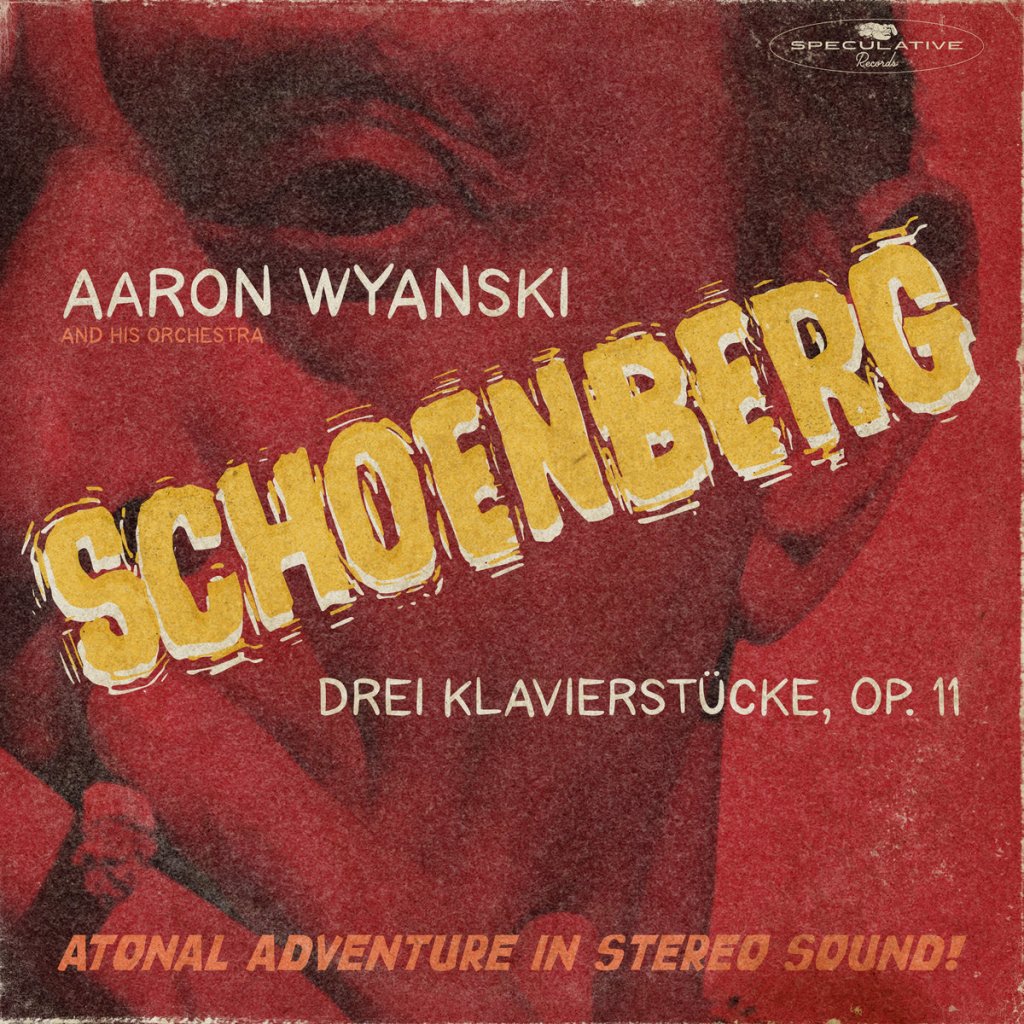
EP: Schoenberg: Drei Klavierstücke, Op. 11; Released: February 2, 2024; Label: Speculative Records; Arranged, conducted and producer by: Wyans
Refuting commonplace theory and structure in order to craft their own personal, unique sound can often lead to musicians to become known as trailblazers in their chosen genres. Arnold Schoenberg became one of America’s most famous composers and music theorists of the early 20th century for his use of atonality in his compositions, which still leaves an influence on contemporary music, particularly in the jazz genre. Aaron Wyanski is one such modern composer who has been so inspired by Schoenberg that he has infused new life into the latter’s ‘Drei Klavierstücke, Op. 11.’
The avant-garde and groundbreaking set of songs is an early example of Schoenberg’s famous method of atonality, which is known, in its broadest sense, for lacking a tonal center or key. In Wyanski’s interpretation of ‘Drei Klavierstücke, Op. 11,’ he distills his diverse style into a deeply personal artistic voice that explores memory, perspective and vulnerability in the modern day.
The Maine-based pianist and musicologist infused both classical and contemporary experimental elements of mid-century lounge and jazz into his new EP, which is his third entry in a series of deep dives into the concept of atonality through jazz. His new reinterpretation of Schoenberg’s work features three tracks that all feature a mesmerizing blend of tradition and innovative sonic exploration.
Inspired by the ideas and work of not only Schönberg, but also such other dissonant and experimental artists as Frank Zappa and Philip Glass, Wyanski’s compositions have a musique feeling to them. The three entries on his new album initially appear to be disjointed compositions. However, they ultimately loop back on themselves, which creates a feeling that all notes are present, which is vital to these types of compositions.
Wyanski’s version of ‘Drei Klavierstücke, Op. 11’ begins with its first tune, ‘Mäßige,’ which is driven by a light shuffling drumbeat and a sporadic saxophone and xylophone. Driven by an underlying current of chiming tones of the horns and traditional vibraphone, the song evokes suspense. The overall blend of classical and modern jazz vibes creates a disjointed layering of textures
The record further leans into suspense when ‘Mäßige’ transitions into its follow-up track, ‘Sehr langsam,’ which features ominous, tense notes through its stringed instruments. The loose rhythm infuses the melody with a fragmented sensation that gives an ambiance of drifting migration. While also infused by noteworthy electric guitar parts and captivating horns that would perfectly drive the score of a sci-fi film noir, the tune’s steady rhythm and orchestration make it an equally soothing jazz ballad.
‘Drei Klavierstücke, Op. 11’ continues its mysterious, modern spin on the classical jazz genre with its space pop-experimental-infused last song, ‘Bewegte.’ The retro, energetic composition features a distinctive Latin beat rhythm mixed with conflicting brass that culminate in a pulsating outro.
Throughout the memorable tracks on ‘Drei Klavierstücke, Op. 11,’ Wyanski crafted a truly unique classical but equally modern jazz composition that offers a distinct take on Schoenberg’s vision. Without changing or adding any notes to the latter’s scores, Wyanski showcases the intricacies of his predecessor’s music by staying true to his signature atonality.
The Maine-based composer’s interpretation of Schoenberg’s music showcases his unique artistic sensibility and appreciation of his predecessor’s work. From the haunting melodies to the intricate harmonies, every moment of the recording is carefully framed by Wyanski’s exceptional artistic intuition.
For more information on Wyanski, visit his official website, as well as his Facebook, Instagram, Spotify, Bandcamp, Soundcloud and YouTube pages.
 Film Factual