
Fear of the perceived dangerous unknown is a powerful driving force in the sci-fi and thriller movie genres, as characters yearn to understand the unfamiliar elements in their lives. These seemingly mystical mysteries can also serve as an allegory for the evils in modern culture. The new drama, ‘Star People,’ uses one of the biggest ambiguities in American history – the cause of the infamous Phoenix Lights incident in 1997 – as a metaphor for immigrants being once again scapegoated for society’s problems.
Filmmaker Adam Finberg, who grew up in Phoenix in the 1990s, made his narrative feature directorial debut on ‘Star People.’ He also wrote the script, and served as a producer with Josh Shader. The thriller stars Kat Cunning (‘The Deuce,’ ‘On Swift Horses’), McCabe Slye (‘Destroyer,’ ‘Fear Street’ trilogy), Connor Paolo (‘The Last Stop in Yuma County,’ ‘Revenge,’ ‘Gossip Girl’), Eddie Martinez (‘The Sinner,’ ‘Night Swim’), Bradley Fisher (‘Westworld’) and Adriana Aluna Martinez (‘Duster’).
‘Star People’ is having its World Premiere at Dances With Films: LA tonight at 7:15pm PT at the TCL Chinese Theater. Blue Harbor Entertainment announced earlier this week that it picked up the movie’s distribution rights before its premiere screening at Dances With Films. The distributor will release the drama in theaters on July 25 and then on VOD on August 12.
‘Star People’ follows Claire (Cunning), a photographer who receives a tip that could finally shed light on her childhood UFO sighting. But a deadly heatwave and unexpected guests threaten to derail her obsessive search for answers.
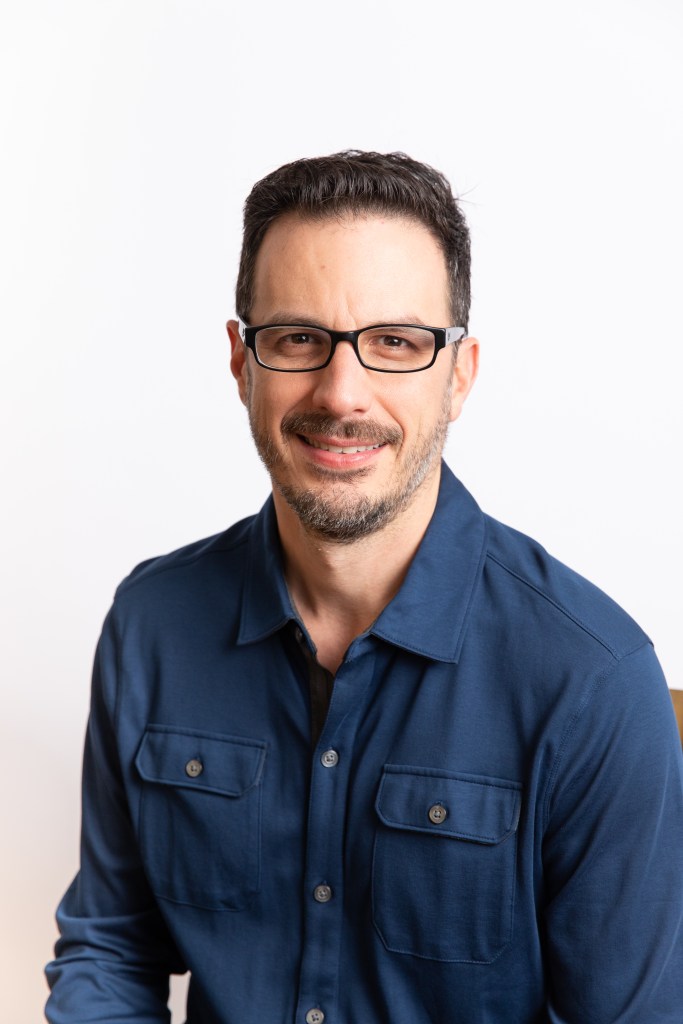
Finberg generously took the time earlier this week to talk about penning, helming and producing ‘Star People’ during an exclusive interview over Zoom. Among other things, the filmmaker discussed that his upbringing in Phoenix influenced him to scribe and direct the thriller. He also shared his appreciation that the project is premiering at Dances With Films.
Film Factual (FF): You wrote the script for the new sci-fi thriller, ‘Star People,’ which was inspired by The Phoenix Lights. Why did you feel compelled to pen the screenplay? How did you approach crafting the story?
Adam Finberg (AF): Well, I grew up in Phoenix, and anyone who’s from Phoenix is familiar with The Phoenix Lights. It was a big event that happened n the ’90s.It was a big event in my late teens. It always interested me, so as I grew up, it just seemed to be an interesting jumping off to tell a story.
Movies that tackle themes of the unknown have always interested me. I grew up in the era of Carl Sagan and when the Voyager spacecraft first started taking pictures of the universe. So I felt like that time was an age of discovery. So that was always in the background of my writing interests.
I also felt like UFOs have always represented this idea of the unknown. A lot of movies have taken the side of fear when it comes to UFOs. There are a lot of horror films about UFOs and aliens. So it’s easy to be afraid of the unknown.
So I’ve always wanted to write about a character who was compelled to chase the unknown. She didn’t want to do it for fame, but instead for meaning. I think it’s always human nature to seek out meaning. So that’s one part of how this narrative feature began.
I also worked on a feature documentary about 10 years ago that’s called ‘The Business of Recovery.’ I directed the documentary, which is about the addiction treatment industry. Making that film brought me into the orbit of a lot of people in the midst of substance abuse in the field of addiction.
I learned a lot firsthand about how trauma is handled differently, person to person. For one reason or another, drugs or alcohol can become a coping mechanism. Some of my interview subjects died from alcohol or other substance abuse reasons during the filming. More died after the documentary was finished.
I was always haunted by that a bit. So I was compelled to write characters who shared how they were dealing with their shared trauma and how they coped with trauma. So this was always something I wanted to write about, just from meeting so many people firsthand who shared their personal stories with me.
I’ve always loved the landscape of Arizona. I lived in L.A. for 20 years, but I’m back in Arizona. I grew up in Phoenix, and the film was shot in the Phoenix area.
It was always a dream of mine to tell a story set in the vast mountainous desert of Arizona. If you ever camp in the desert under the stars, it makes your mind wander. I think all of these things contributed to how ‘Star People’ came about when I was writing it.
FF: Speaking of being inspired by Arizona’s desert and mountains, how did you secure the locations where you shot the film?
AF: That’s a great question. Obviously, the locations were a very important part of this film. I worked closely with my location manager, Bryan Bukovec. We were traveling all around to find an area that looked remote enough, but was also accessible enough for us to shoot in. We didn’t have the budget to completely relocate to a place that was way out in the middle of nowhere.
So most of the desert exteriors were shot on a ranch out in the Superstition Mountains. It’s kind of southeast of Phoenix, in the Mesa area, but it’s still in driving distance. We also shot in the South Mountains, which is south of Phoenix.
So there was a lot of driving on dirt roads into canyons off the grid. Once you go into these canyons, even if they’re not that far away, you’re still in the middle of nowhere.
FF: Besides scribing the script, you also made your narrative feature film directorial debut on the project. How did writing the screenplay influence the way you approached helming ‘Star People?’ What was your overall directorial style on the set?
AF: I attended the American Film Institute (AFI) for directing some years ago. Since then, I’ve directed music videos, commercials, short films and documentaries. They took me many different directions into editing.
But I’d always wanted to direct a narrative film. But it’s a challenge for any aspiring feature filmmaker to get their first feature going.
What I love about the process is the collaboration – I love working with other people. Filmmaking is probably the most collaborative artform there is because you’re working with a team of tens, or even hundreds, of people to make a movie.
This movie wasn’t that big, but there were a lot of people involved in this project, from the cast to the crew. I love embracing the creativeness of the people around me to help make the best story that we can make. So working with everyone was an absolute joy on this project.
FF: The drama stars Kat Cunning, McCabe Slye, Connor Paolo, Eddie Martinez, Bradley Fisher and Adriana Aluna Martinez. What was the casting process like for the movie?
AF: The casting process was great. I worked with three wonderful casting directors – Kendra (Shay Clark) and Helen (Geier) were my L.A. casting directors, and Bella Hibbs was my casting director in Phoenix. She did a wonderful job helping me find the right cast for this film.
I knew I just needed someone who I would believe would go on these adventures in the desert. In this era, a lot of casting is done on Zoom, and I know that’s very challenging for many actors.
But I was still able to see amazing performances through the casting process, even through it was on screen. If I could see that through the little monitor, I knew it was going to be even bigger once we got onto a film set.
It’s a lot of work finding the right actor for the lead role, and then finding the supporting actors who have the best chemistry with them. But I think we did a great job on this film.
FF: Once you began production on ‘Star People,’ how did you work with the cast to build their characters and the overall story?
AF: Once we cast all of the actors, it was important to me to get to know all of them individually. I feel like it’s the truest my job as the director to help facilitate them bringing the truest version of themselves to the set. When they’re playing a character, they’re still trying to connect with something that is real, as that all shows up on camera.
So I tried to understand what made each of them tick. Every actor has different needs, in terms of how they work and what their process is, so I just see myself as a facilitator.
As I got to know them, I started building trust with them. That’s very important because you’re asking people to be very vulnerable in front of strangers and in front of the cameras. So I guess you can say that building these connections is partly a trust building exercise. (Finberg chuckles.)
FF: The thriller was shot by cinematographer Aiden Chapparone. How did you work together to determine how you would visually shoot the film?
AF: That’s a great question. Aiden is an incredible DP (Director of Photography), as he makes beautiful images.
I’m very influenced by Bruce Block, who wrote the book, ‘The Visual Story,’ which is about visual structure. It’s stuck with me since he taught a lecture when I was attending AFI.
Building a deck that really helped define the language of the film was really important. I worked with Aiden so that we could all get on the same page with what our visual structure would be for the film. There were obviously limitations on budget of this size, but we still wanted to make sure that we had a coherent visual language going into the project.
Aiden was so great to work with; he was always so calm, even under high stress. I loved working with him to figure out the best way to tell the story and keep us in the point-of-view of the main characters. We also worked together to give the audience an experience they would always remember.
FF: Besides penning and helming ‘Star People,’ you also produced the feature. How did you balance producing and helming the drama?
AF: That’s a good question. I am a producer on the project, but I also wanted to work with someone who was far more experienced in producing than me. I ended up working with Josh Shader, who I have a history with; I actually met him back in my college days at Northwestern.
I worked with him on what was the very first film I’ve ever worked on, when I was a freshman. We worked together on a short he directed, and I was a production assistant. That was back in about 1999, and we’ve always stayed in touch after that.
We were both in Los Angeles when I was getting this film going. I was talking to him about it, and I felt like the team effort would be a great experience, and we would get the best film.
I really love working with him. He’s knowledgeable on all elements. Like I said earlier, I really love working with people who are really good at what they do, and Josh is really great at what he does. When I was on set, he let me focus on what I needed to, and he continues to be a big part of this film.
FF: ‘Star People’ will have its World Premiere (tonight) during Dances With Films: LA. What does it mean to you that the thriller is screening at the festival?
AF: I’m thrilled that we get to have our World Premiere at Dances With Films. It’s a wonderful festival; I attended it some years back to support a film from a friend of mine. I’ve also attended some other events and films, but I’ve never attended it first-hand as a filmmaker.
The vibe at the festival is very friendly and genuine. So I’m loving meeting and supporting other filmmakers, and going to see their films.
The theaters that the festival’s projects are screening in are wonderful. They have greet picture, sound and seating. So I’m really thankful to the festival for having us.
FF: Blue Harbor Entertainment will release ‘Star People’ in theaters on July 25, and then on VOD on August 12. How did you secure the dual distribution for the movie?
AF: Distribution is a puzzle that any filmmaker has to deal with if they’re not working on a big budget studio film. We have to question, how do we get our movie out there?
But Blue Harbor seemed right for us. Like I mentioned earlier, collaboration is so important to me. I’ve felt working with them has been a great process. How we would release the movie was always a big question for me since the beginning of the production, as we have some limited resources.
But Blue Harbor has been very supportive. They genuinely like the film, which I think is important when you’re talking about an indie film. So they’ve been a great team to work with on distributing the movie.
 Film Factual