
For all the talk of it being “America’s pastime,” the list of truly great baseball movies is a surprising and comparatively short one, most would likely agree. The gold standard top-tier is comprised of Bull Durham, Field of Dreams, Moneyball, A League of Their Own and The Natural, in no particular order. Maybe 42, For Love of the Game or Major League work their way into best-of consideration for some folks, but that’s about it for the legitimate top answers if you were querying 100 honest people for Family Feud (sorry, Fever Pitch).
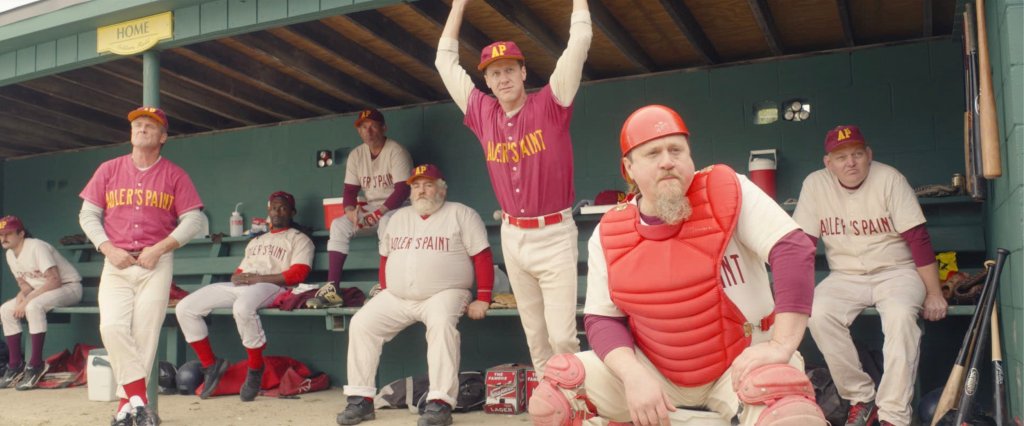
Into this repetitive group chat ambles the shaggy little indie Eephus, a wildly praised new baseball film, with nary a star in sight, that robustly embraces its hangout vibe in a way downright out of fashion these days, even in the independent realm. Set in a small Massachusetts town sometime during the 1990s, the movie focuses on a pair of adult-league squads who get together to provide a send-off for their beloved Soldiers Field, before it’s torn down to clear the way for the construction of a new school. As the daylight slowly begins to fade, the players — as well as an old, diehard fan who comes to watch and score their games — grumble and reflect on the events of the day, which of course also serve as a larger metaphor.
The feature directing debut of co-writer Carson Lund, the movie premiered in the separate, independent Directors’ Fortnight Section of the 77th Cannes Film Festival, a somewhat curious inclusion for a country where there is no real connection to the sport. Its title refers to a curious, high-arching curveball that is thrown so slowly that it baffles and freezes especially experienced hitters, making sluggers look like fools. The rub is that this pitch is itself exceptionally difficult to master, making it quite rare.
It’s awfully difficult to come down too hard on Eephus, given the smart ways in which its unhurried, looping rhythms and naturalistic acting styles lean into some of the very themes which it’s exploring — namely community and aging, routine and change. Still, the movie would undeniably benefit from a bit sharper characterizations, and some form of more dynamic contrast or conflict in its interpersonal relationships. As is, because it’s a true ensemble, it’s difficult to strongly identify with any character, and so it takes a while for the movie to exercise the full effects of its charms. It’s a slow-burn, in other words. Basically, it’s best to think of this as a sentimental dramedy loosely in the mold of Robert Altman that just so happens to unfold against the backdrop of baseball.
Eephus comes housed in a regular clear plastic case with a full-color reversible sleeve that features production photographs on the inside. A nice mock line-up card features cast information for both the teams in the film, Adler’s Paint and the Riverdogs, and on the inside there’s a nice essay on the movie and baseball by film critic Caden Mark Gardner, originally published in Reverse Shot. This level of care in the packaging and presentation from Music Box Films hints at the delights found within the release’s robust slate of supplemental features.
First off, there are two separate audio commentary tracks — the first of which features Lund, co-writer Michael Basta and director of photography Greg Tango. Naturally, this track is more nuts-and-bolts-oriented, but there’s a rapport between the participants that makes for a very easygoing listening as well. A cast-spotlighting soundtrack might be of less interest to most viewers/listeners, but there are nevertheless some amusing anecdotes to be found.
Thirty-five minutes of deleted scenes (labeled “extra innings”) provide a good look at some additional character beats that, honestly, could have increased the movie’s emotional hold and punching power. Eleven minutes of bloopers (labeled “big whiffs”) showcase plenty of missed cutoff throws, among other gaffes and joking around. A 19-minute interview with 78-year-old Bill “Spaceman” Lee, a former Major League pitcher (and subject of an excellent 2006 documentary) well known for the titular pitch, is plenty entertaining, but the biggest surprise amongst the bonus features, for those really wishing to dig down into the movie’s making, is probably the most low-fi. As discussed elsewhere in interview material, Lund took detailed photographs at different times of day and imported posed, angled photos of his actors to help create an array of storyboards to assist in physical production. Looking at these creations is a bit akin to looking at an emerging child artist’s collage work, but that’s entirely the point — the utility of this work is richly evident in the movie’s framing, and it shows would-be filmmakers that one need not always have access to all the fanciest and most expensive equipment.
Exclusive to the Blu-ray release is a post-screening Q&A session, in which Lund chats with moderator Monica Castillo, from a March 2025 screening at the Jacob Burns Film Center in Pleasantville, New York. Speaking about how his work as a film critic informed his perspective in scripting the film, Lund talks about some of his inspirations and the overall vibe for which he was aiming. Also exclusive to the Blu-ray is a nice conversation with Lund at the Harvard Film Archive. Three promos, running around two-and-a-half minutes, and a three-minute reel from an October 2024 pick-up game, edited together almost like a music video, round things out.
 Film Factual