
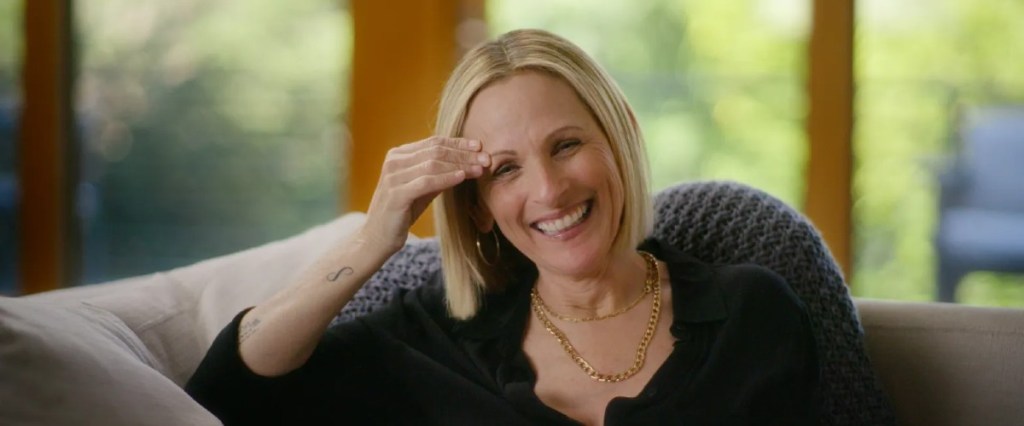
The list of nonfiction biopics made while the subject is still living is rather notoriously full of far more misses than hits. Regardless the degree of active participation of the subject, there’s a tendency to if not pull punches then at least sand down edges, resulting in hagiographies instead of well-rounded portraits that grapple substantively and honestly with questions of both action and legacy. Marlee Matlin: Not Alone Anymore, which debuted to deservedly warm reception at the 2025 Sundance Film Festival, thankfully lands amongst the exceptions, engagingly chronicling the life and career of its namesake actress and activist.
Matlin, deaf since she was 18 months old, burst onto the scene in 1986’s Children of a Lesser God, in which she made her acting debut. Starring opposite William Hurt in the romantic drama, Matlin, though barely out of her teens, would be launched into the pop cultural mainstream and go on to win both the Academy Award and Golden Globe for Best Actress, at a time when visibility for deaf people was nowhere near what it is today. While that film did open doors, Matlin also found movie roles for deaf performers lacking. Consequently, Matlin has worked chiefly in television (including perhaps most notably on The West Wing), where roles for deaf actors have been more easily integrated into productions. A notable exception, of course, arrived in the form of 2021’s Oscar-winning CODA, which receives a loving unpacking here. She has also, as of late, segued into episodic directing.
Not Alone Anymore does justice to the fullness (and difficulty) of Matlin’s life, recounting the emotional, physical and sexual abuse she suffered during her real-life relationship with Hurt (plus sexual abuse as a child at the hands of a female babysitter as a child); her struggles with alcohol and drug addiction in her twenties; and her forays into advocacy for the deaf community, which were not always well-received by her peers. It’s a movie that contains multitudes and a bit of messiness, in other words — just like real life.
The fact that the documentary is directed by Shoshannah Stern, herself hearing-impaired and coming from a fourth-generation deaf family, gives Not Alone Anymore a unique authenticity and hand-in-glove perspective. Mainly, though, the movie is so involving because of the candor and deep-rooted introspection which marks its subject. Matlin, now 60, has no interest in wearing a halo, and is a hard judge on herself at times. While Stern skillfully integrates old material, she also serves as a solid interviewer herself, in sit-downs with both Matlin and other interviewees. Longtime Matlin friend and mentor Henry Winkler comes across as a mensch, and Aaron Sorkin speaks eloquently about the talents Matlin brought to bear on his show.
Among the most interesting portions of the movie are sections that delve into Matlin’s feelings over family members’ fluency (or lack thereof) in sign language, as well as an explanation of the concept of language deprivation, as when Matlin makes the point that by being deaf she had literally never heard the phrase “domestic violence,” and therefore had no frame of reference to understand what was happening to her during her relationship with Hurt. It’s also fascinating when the movie digs into the controversy over the 1988 appointment of a non-deaf chief executive at Gallaudet University (itself the subject of another Sundance-minted documentary, Deaf President Now!), America’s only university exclusively for deaf and hard-of-hearing students. Matlin’s platform afforded her the opportunity to help shine a brighter spotlight on the issue at the time, but also opened up divisions within the community between different levels of deafness. This is incredibly interesting to ponder and learn about, and a great example of the multi-layered approach Stern brings to the project that likely would have been lacking or at least not as well-developed had the movie been helmed by a hearing director.
If there’s a knock, it’s that really a great deal of this subject matter has been covered in Matlin’s excellent 2009 memoir, I’ll Scream Later. Still, movies like this provide comfortable 90-minute (approximate) sits for interested but more passive audiences who might otherwise find it difficult to locate either the time or active commitment to a book. There are a couple curious blind spots or omissions (Matlin’s daughter is interviewed yet her husband of more than three decades is not, for example), but Not Alone Anymore is a robust and well-considered examination of a life well-lived.
Released to home video via Kino Lorber, the film comes to Blu-ray presented in 1.78:1 widescreen, preserving the aspect ratio of its theatrical exhibition. In addition to 5.1 surround and 2.0 stereo tracks, the title is naturally presented with open English subtitles. In addition to the movie’s trailer, there are a modest collection of outtakes and a Q&A session with Matlin and director Stern moderated by writer Esther Zuckerman. For both those already a bit familiar with Matlin’s life story and those who just generally respond to hardscrabble stories of adversity, triumph and wisened reflection (and maybe even wishing to instill a bit of empathy in their kids), Not Alone Anymore is a worthwhile treat.
 Film Factual