
On Dec. 17, 2025, the Women Film Critics Circle (WFCC) announced its selections for the best in film for 2025. The voting process was conducted virtually.
The critics group is celebrating 2025’s best movies by and about women, including outstanding achievements by women who rarely get to be honored historically in the film world. The award-winning movies also emphasize WFCC‘s mission statement that women’s perspectives and voices in film criticism need to be recognized fully.
WFCC is an association of 75 women film critics and scholars from around America and world, who are involved in print, radio, online and TV broadcast media. The group was formed in 2004 as the first women critics organization in the United States, in the belief that women’s perspectives and voices in film criticism needs to be recognized fully. WFCC also prides itself on being the most culturally and racially diverse critics group in America, and best reflects the diversity of movie audiences.
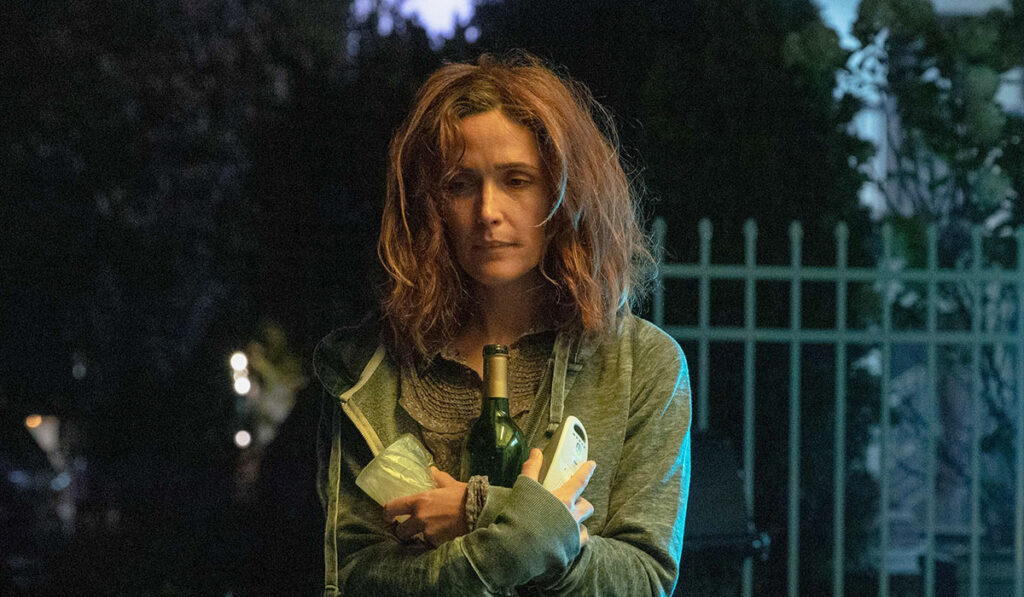
Writer-director Mary Bronstein’s psychological movie, ‘If I Had Legs I’d Kick You,’ released by A24, won the group’s prize for Best Movie About Women.
Oscar-winning co-scribe-helmer Chloé Zhao’s historical drama, ‘Hamnet,’ is WFCC’s most-honored movie of 2025 with three wins. Zhao won the award for Best Movie by a Woman. She was also honored with the Best Woman Storyteller (Screenwriting Award) with her co-scribe, Maggie O’Farrell. Star Jessie Buckley was also named Best Actress for her performance in the feature, which was released last month, courtesy of Focus Features.
The full list of WFCC’s 2025 awards is below.
Best Movie About Women
Winner: ‘If I Had Legs I’d Kick You’
Runner Up: ‘Hamnet’
‘Eleanor the Great’
‘Sorry, Baby’
Best Movie by a Woman
Winner: Chloé Zhao (‘Hamnet’)
Runner Up: Eva Victor (‘Sorry, Baby’)
Lynne Ramsay (‘Die My Love’)
Mary Bronstein (‘If I Had Legs I’d Kick You’)
Best Woman Storyteller (Screenwriting Award)
Winner: Chloé Zhao, Maggie O’Farrell (‘Hamnet’)
Runner Up: Eva Victor (‘Sorry, Baby’)
Lynne Ramsay, Alice Birch (with Enda Walsh) (‘Die My Love’)
Mary Bronstein (‘If I Had Legs I’d Kick You’)
Best Actress
Winner: Jessie Buckley (‘Hamnet’)
Runner Up: Rose Byrne (‘If I Had Legs I’d Kick You’)
Amanda Seyfried (‘The Testament of Ann Lee’)
Jennifer Lawrence (‘Die My Love’)
Best Actor
Winner: Ethan Hawke (‘Blue Moon’)
Runner Up: Michael B. Jordan (‘Sinners’)
Leonardo DiCaprio (‘One Battle After Another’)
Timothée Chalamet (‘Marty Supreme’)
Ethan Hawke has shared the following acceptance speech with WFCC for his win as Lorenz Hart in the biographical comedy-drama, ‘Blue Moon’: “Thank you to all of the members of the Women Film Critics Circle. In a year of extraordinary cinema, it’s an honor to receive this accolade. I share it with Richard Linklater for his precise direction, Robert Kaplow for his diamond of a script, and the gracious ensemble who helped me inhabit Larry Hart every day — not least of all Andrew Scott, Margaret Qualley and Bobby Cannavale.”
Best Supporting Actress
Winner: Regina Hall (‘One Battle After Another’)
Runner Up: Andrea Riseborough (‘Goodbye June’)
Odessa A’zion (‘Marty Supreme’)
Samantha Morton (‘Anemone’)
Best Foreign Film by or About Women
Winner (tie): ‘Left-Handed Girl’
Winner (tie): ‘The Voice of Hind Rajab’
‘All That’s Left of You’
‘Belén’
Best Documentary by or About Women
Winner: ‘My Mom Jayne’
Runner Up: ‘The Perfect Neighbor’
‘Put Your Soul on Your Hand and Walk’
‘The Librarians’
Best Equality of the Sexes
Winner: ‘Sinners’
Runner Up: ‘The Testament of Ann Lee’
‘Lilly’
‘Tatami’
Best Animated Female
Winner: Rumi (‘KPop Demon Hunters’)
Runner Up (tie): Amélie (‘Little Amélie or the Character of Rain’)
Runner Up (tie): Judy Hopps (‘Zootopia 2’)
Scarlet (‘Scarlet’)
Best Screen Couple
Winner: Wunmi Mosaku and Michael B. Jordan (‘Sinners’)
Runner Up: Jessie Buckley and Paul Mescal (‘Hamnet’)
Elizabeth Olsen and Miles Teller (‘Eternity’)
Laura Dern and Will Arnett (‘Is This Thing On? ‘)
Best TV Series
Winner: ‘Hacks’ (Season 4)
Runner Up: ‘Dying for Sex’
‘The Girlfriend’
‘The White Lotus’ (Season 3)
Adrienne Shelly Award* – For a film that most passionately opposes violence against women
Winner: ‘Sorry, Baby’
Runner Up: ‘Christy’
‘Companion’
‘Lilly’
Josephine Baker Award* – For best expressing the woman of color experience in America
Winner: ‘Sinners’
Runner Up: ‘Hedda’
‘Rosemead’
‘Wicked: For Good’
Karen Morely Award* – For best exemplifying a woman’s place in history or society, and a courageous search for identity
Winner: ‘Eleanor the Great’
Runner Up (tie): ‘Die My Love’
Runner Up (tie): ‘The Testament of Ann Lee
‘Familiar Touch’
Acting and Activism Award
America Ferrera
Lifetime Achievement Award
Diane Keaton
*Adrienne Shelly Award: Adrienne Shelly was a promising actress and filmmaker who was brutally strangled in her apartment in 2006 at the age of forty by a construction worker in the building, after she complained about noise. Her killer tried to cover up his crime by hanging her from a shower rack in her bathroom, to make it look like suicide. He later confessed that he was having a “bad day.” Shelly, who left behind a baby daughter, had just completed her film Waitress, which she also starred in, and which was honored at Sundance after her death.
*Josephine Baker Award: The daughter of a laundress and a musician, Baker overcame being born black, female and poor, and marriage at age fifteen, to become an internationally acclaimed legendary performer, starring in the films Princess Tam Tam, Moulin Rouge and Zou Zou. She also survived the race riots in East St. Louis, Illinois as a child, and later expatriated to France to escape US racism. After participating heroically in the underground French Resistance during WWII, Baker returned to the US where she was a crusader for racial equality. Her activism led to attacks against her by reporter Walter Winchell who denounced her as a communist, leading her to wage a battle against him. Baker was instrumental in ending segregation in many theaters and clubs, where she refused to perform unless integration was implemented.
*Karen Morley Award: Karen Morley was a promising Hollywood star in the 1930s, in such films as Mata Hari and Our Daily Bread. She was driven out of Hollywood for her leftist political convictions by the Blacklist and for refusing to testify against other actors, while Robert Taylor and Sterling Hayden were informants against her. And also for daring to have a child and become a mother, unacceptable for female stars in those days. Morley maintained her militant political activism for the rest of her life, running for Lieutenant Governor on the American Labor Party ticket in 1954. She passed away in 2003, unrepentant to the end, at the age of 93.
 Film Factual