
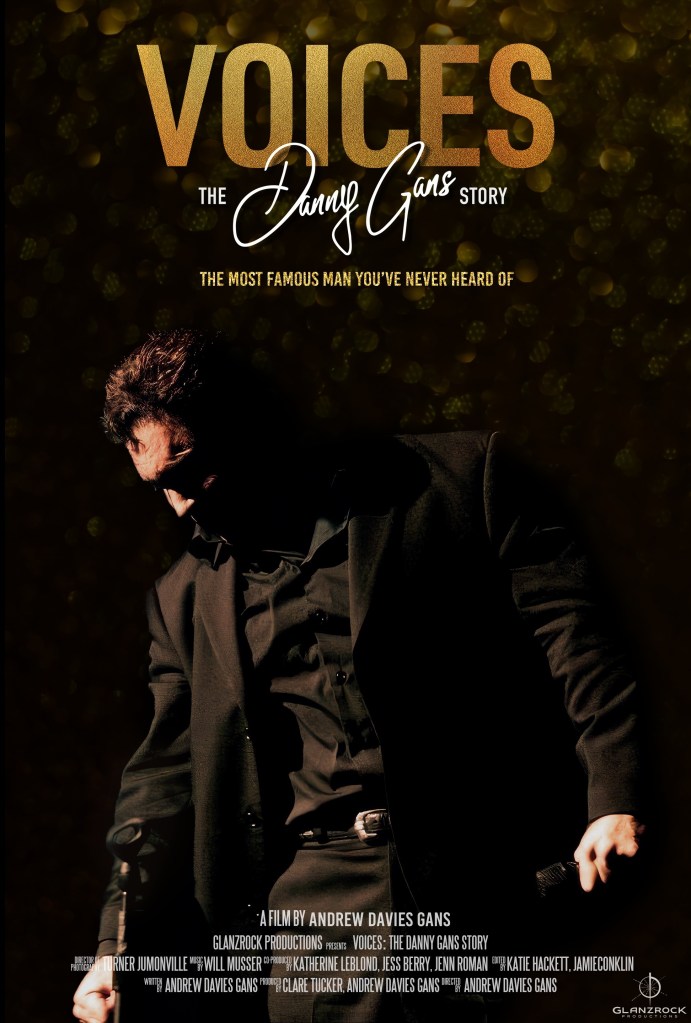
The most intimate tribute a child can offer to their parents is creating a compelling portrait that honors the full truth of the latter’s remarkable life. The new music documentary, ‘Voices: The Danny Gans Story,’ is an endearing, deeply personal cinematic experience that’s a stunning memorial to the titular Las Vegas singer and comedian.
The performer’s son, Andrew Davies Gans, made his feature film writing and directorial debuts on the project. The experienced executive producer also served as a producer on the movie.
‘Voices: The Danny Gans Story’ traces the improbable rise and heartbreaking loss of Danny Gans, who was known as “The Man of Many Voices.” The documentary is a captivating exploration of a son’s journey to uncover the truth behind his father’s extraordinary life. Andrew delves deep into the inspiring and improbable journey of his father, and the circumstances surrounding his untimely passing.
As Andrew navigates a path of self-discovery, growth, and acceptance, his story unfolds against the compelling backdrop of his father’s underdog triumphs. It’s a story about the echoes of a voice that continues to inspire, reverberating through the life of the son he left behind.
But what elevates the film beyond even its profoundly moving story is its breathtaking cinematography and exquisitely layered score – two elements that transform the intimate biography into a transcendent tribute.
From its opening frames, ‘Voices: The Danny Gans Story’ announces itself as a movie crafted with extraordinary visual care. The cinematography does more than document – it interprets. Archival performance footage is interwoven with softly lit contemporary interviews, which creates a visual dialogue between the past and present. The camera lingers on backstage spaces, empty theaters and flickers of marquee light as if searching for Danny’s lingering presence.
One of the film’s most striking artistic choices is its use of animation to depict private, reflective moments, notably Danny alone backstage, gathering himself before stepping into the spotlight. The sequences are rendered with an artistic tenderness, emphasizing the emotional cost of stardom. The lighting is often warm yet shadowed, echoing the duality of triumph and struggle that defined his life.
Las Vegas itself becomes a character. The glow of the Strip is not shown as spectacle alone but as a halo – an almost mythic aura surrounding a performer who anchored sold-out crowds for more than a decade. The visuals subtly reinforce the idea that while stages may empty and lights may dim, something of Danny’s spirit still shimmers in the desert night.
The camera also turns inward, capturing Andrew’s own vulnerability. The framing grows more intimate in the second half of the movie, mirroring his internal shift from biographer to son seeking answers. The visual palette deepens and the compositions tighten as what begins as a chronicle evolves into a quiet act of communion.
If the cinematography gives the movie its glow, the score gives it its heartbeat. The music moves with emotional precision that’s always resonant. It surges gently beneath archival performance clips, enhancing the electric energy Danny generated onstage, and then softens into emotional minimalism during moments of reflection. There are passages where piano motifs seem to hover like unfinished sentences, underscoring the documentary’s central theme: a voice that still reverberates long after it has fallen silent.
The score’s brilliance lies in its restraint. It understands when to step forward and when to let silence speak. In the documentary’s most powerful sequences – particularly as Andrew wrestles with the circumstances surrounding his father’s passing – the music feels almost like breath. It carries grief, pride, confusion and love in equal measure.
By the film’s final act, the score and imagery fuse into something profoundly cathartic. The music rises not in bombast but in affirmation, transforming sorrow into celebration.
What makes ‘Voices: The Danny Gans Story’ so extraordinary is that it honors the structure of classic celebrity documentaries while also daring to become something far more intimate. It explores the underdog journey – from minor league baseball dreams to Broadway to a defining Las Vegas residency – while also examining the physical toll, the relentless drive and the human cost behind the applause.
But accolades only tell part of the story. The movie feels like Andrew’s answer to the absence of a statue or boulevard bearing his father’s name. Through luminous cinematography and a deeply affecting score, the filmmaker builds something more lasting: an emotional monument.
‘Voices: The Danny Gans Story’ is not simply about the legendary eponymous entertainer. It’s also about resonance – how a father’s voice can echo through a son’s life, how ambition can coexist with vulnerability and how art can become an act of love.
‘Voices: The Danny Gans Story’ screened at the Sedona International Film Festival. It will next screen at the San Luis Obispo Film Festival
 Film Factual