
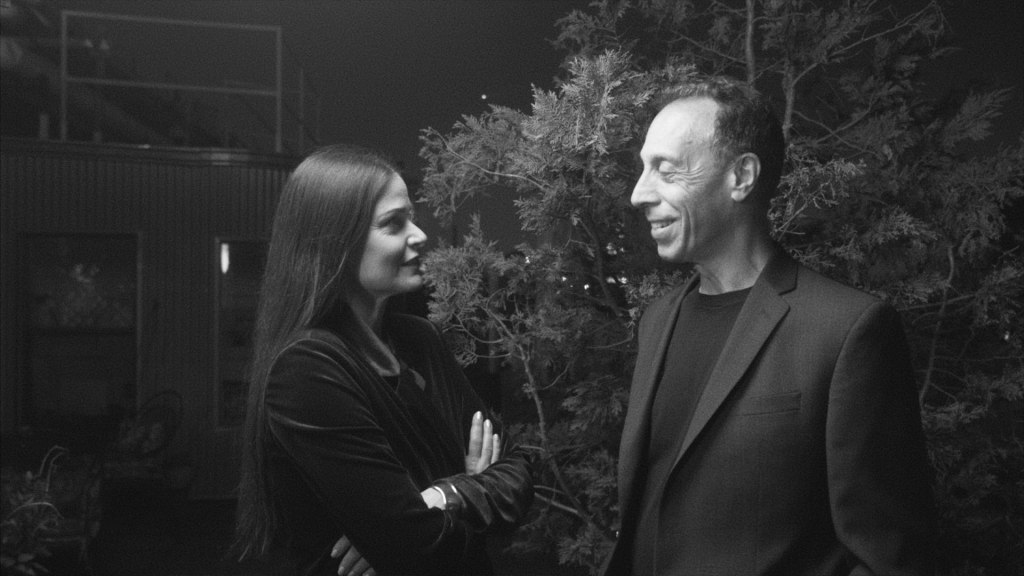
Interruption may initially appear to be a source of obstruction in the creative process. But the new movie, ‘Stop Time,’ was born out of description, which ultimately proved to be a powerful source of inspiration for filmmaker Paul Schwartz. The writer-director-producer crafted the project not from creative momentum, but from emotional standstill.
Through an unconventional production process and deeply collaborative performances from actors Tara Westwood and Nelson Avidon, the drama evolved became intimate and quietly resonant.
‘Stop Time’ tells the intertwined stories of Peter de Vries (Avidon), a photographer, and Adrianna Maier (Westwood) a theatrical lighting designer. Both are carrying such heavy burdens of sadness that mutual friends of theirs believe each could lighten for the other. Over the course of 24 hours in New York City their lives circle, until they meet at the opening of Peter’s gallery show, which leads them both down an unexpected path.
The feature had its World Premiere in the Features Section during this year’s Dances with Films: NY at Regal Union Square. Schwartz, Westwood and Avidon generously too the time to discuss their experiences making the movie during exclusive Zoom interviews in promotion of the project’s screening in January at the New York-based festival.
Schwartz revealed that his inspiration for penning ‘Stop Time’ came during one of the most difficult periods of his life. After completing his previous feature, ‘The Seasons: Four Love Stories,’ he was preparing for its festival run when his wife was diagnosed with breast cancer in early 2023. For nearly a year, he stepped away from filmmaking entirely, dedicating himself to supporting her through a grueling treatment process.
When that chapter finally closed – with his wife thankfully recovering – Schwartz found himself creatively paralyzed. “I’d sit in front of a blank screen and nothing would come,” he recalled.
The breakthrough came unexpectedly, when Avidon – who went on to star in movie – reached out about an old idea involving a photographer. That spark, combined with Schwartz’s lived experience of fear, uncertainty and emotional exhaustion, became the foundation for their latest story.
Initially, ‘Stop Time’ existed as a 44-minute short focused solely on the actor’s character. But after an early screening, a simple question from his wife – “What’s Adriana’s story?” – reshaped the entire feature.
Schwartz went back and wrote a parallel narrative. He filled out Westwood’s character and ultimately weaved the two arcs together into a feature. The result is a film structured like two lives moving in orbit – separate, but inevitably drawn together.
Once Schwartz finished scribing the script, his approach to directing reflected both necessity and instinct. With a budget under $30,000, he operated as a true one-man crew – writing, directing, producing and even contributing to the drama’s music.
Rather than shooting on a traditional schedule, production unfolded in fragments: 20 total shoot days spread across nearly two months. While unconventional, this method gave Schwartz time to recalibrate between shoots.
It also demanded a high level of trust in the cast. “They’re incredibly professional,” the filmmaker said. “We could step away for a few days, come back and pick up right where we left off.”
That trust extended into the creative process. While Schwartz maintained a clear vision – particularly in tone and structure – he remained open to collaboration. Avidon described their dynamic as one of “artistic tension,” where differing ideas often led to stronger results.
“There were times I’d make suggestions, and Paul was very open to that,” the actor said. “That’s where the spontaneous moments come from.”
For both Avidon and Westwood, the decision to join ‘Stop Time’ was rooted in personal connection. The actress didn’t hesitate when Avidon first approached her. “He could ask me to do anything, and I would say yes,” she admitted. Only afterward did she read the script, which was an experience that confirmed her instinct.
“I was so glad I had already said yes,” the performer said. “Paul is a wonderful writer.”
Avidon, meanwhile, had a long-standing creative relationship with Schwartz through the Actors Studio. The role was written specifically for him, tailored to his strengths and emotional range.
The filmmaker “knew exactly what I could do,” the actor said. “That makes a huge difference.”
Their existing friendship also translated seamlessly onscreen. Both actors emphasized the importance of trust and familiarity in building authentic performances.
“You never know if you’ll click with someone,” Avidon noted. “But we did—we’re very much in sync.”
Despite the movie’s layered narrative structure, rehearsal was surprisingly minimal. Schwartz focused primarily on key emotional scenes, allowing the performers to discover much of the material organically. Some cast members even rehearsed independently, deepening their connections outside of formal direction.
Improvisation also played a subtle but meaningful role. Westwood recalled experimenting with unscripted moments, particularly in a theater scene. Those moments weren’t all meant to appear in the final cut of the film, but they served as a way to build chemistry between the two leads.
“We’d play around, laugh, loosen up,” the actress said. “Then Paul would say, ‘Now bring that energy into the script.’”
Even though those improvised takes didn’t make it into the drama, they informed the performances in crucial ways. They created a sense of lived-in history between characters.
For Westwood, continuity was especially important. Since so much of her material was filmed after the original short, she had to ensure her performance aligned seamlessly with what had already been established.
“As an actor, I want to justify everything my character does,” the performer explained. “So I had to make sure it all connected.”
That same commitment to intention and cohesion extended beyond performance and into ‘Stop Time’s visual design. From the beginning, Schwartz envisioned the drama in black and white. The choice reflects both aesthetic restraint and thematic clarity.
The film’s cinematography is marked by stillness. It emphasizes static compositions, minimal camera movement and carefully framed shots that evoke photography. This was no coincidence.
Since Avidon’s character is a photographer, Schwartz leaned into that perspective, crafting visuals that feel observational. They feel almost like a series of captured moments, rather than continuously unfolding action. “It’s a photographer’s way of seeing,” the filmmaker said.
That philosophy extended to the movie’s locations as well. Shot across New York City, from Coney Island’s boardwalk to quiet interiors, the drama embraces natural environments. Scenes were often filmed without shutting down public spaces, allowing real life to unfold in the background.
“There were joggers, couples, people just living their lives,” Avidon said. “It added authenticity.”
Besides the cinematography, sound design and music played a crucial role in shaping the movie’s emotional landscape. Schwartz, an accomplished musician, either composed or selected much of the score himself.
The filmmaker’s approach was intentionally restrained. He used music sparingly to enhance, rather than dictate, emotion.
“He knows exactly how much music is enough,” Avidon said. “Just enough to bring out what’s already there.”
One standout piece was a song Schwartz had written years before he shot ‘Stop Time.’ The track finds new life in the movie, underscoring its themes with a haunting, almost timeless quality.
With its emotional tone firmly established through music, the drama was ready to meet its audience for the first time in January. ‘Stop Time’s World Premiere at Dances With Films: NY was a milestone that underscored the project’s deeply personal journey.
For Avidon, the experience was profoundly moving. “I had friends there from every stage of my life, even high school,” he said. “Hearing people cheer when your name comes on screen was something special.”
The audience response matched that emotional intensity. “They laughed, they cried,” the actor added. “When someone tells you they wept, that’s the greatest compliment.”
Westwood, though unable to attend the premiere screen due to a family commitment, followed along through messages and photos. The outpouring of support from friends and collaborators confirmed what she already felt about the project.
“It’s a sweet story,” the actress said. “I think we need more of those right now.”
In an industry often driven by scale, ‘Stop Time’ stands as a reminder of what can be achieved with intimacy, collaboration, and emotional honesty. Built from personal hardship, shaped through trust and executed with remarkable efficiency, the drama captures something rare: a quiet authenticity that lingers.
For Schwartz, Westwood, and Avidon, the experience was more than just another project – it was a testament to the power of storytelling in moments when time itself seems to stand still.
 Film Factual