
Ambition, loyalty and betrayal are always in style in tense work environments. That’s certainly the case for the characters in the new drama in ‘Frienemies,’ a three-part series that delivers a glossy, high-stakes look behind the scenes of the cutthroat world of high fashion.
Snoop Robinson created the story for, as well as directed, served as the director of photography on and edited, the television project. The series is based on his stage play of the same name. He also served as an executive producer on the series with former Dallas Cowboys player, Kelvin Garmon, Executive Producer of SRG Entertainment Group. ‘Frienemies’ stars Missy Lee, Sekou Calhoun, Chanté Small and Alexandria Warfield.
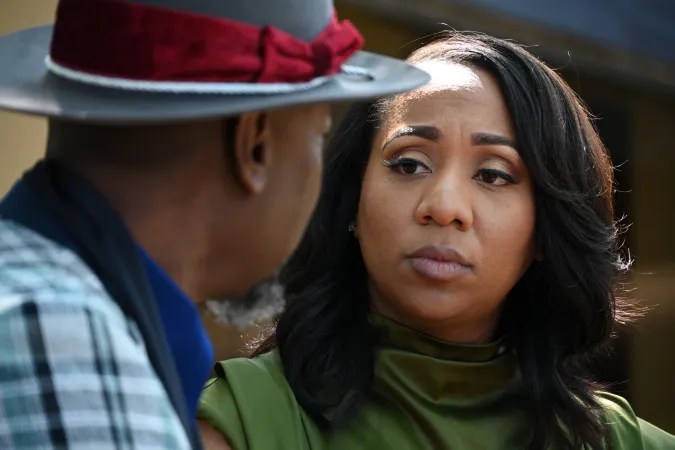
‘Frienemies’ follows Tracy (Warfield) as she deals with the reality of her life in a women’s prison, but she still hasn’t come to terms with what she did to put her behind bars. She reminisces about her life as the right-hand woman in a bustling fashion boutique run by talented, but demanding designer John Lovely (Calhoun).
While John’s creations are celebrated, his business is rife with tension, back biting, and complicated relationships. Tracy struggles to survive in the environment as she manages their clients and prepares for the next big show. Feeling overwhelmed, she hires a trusted friend, Samantha (Lee) to take the pressure off of her and help her right the ship. However, Samantha has another agenda which has the potential to undo Tracy’s entire world and bring it all crashing down.
Robinson generously took the time to talk about making ‘Frienemies’ recently during an exclusive interview over Zoom. Among other things, he discussed the process of adapting the story from stage to screen, assembling a committed cast and crafting a visually rich world rooted in both authenticity and spectacle.
Film Factual (FF): You directed the new limited series, ‘Frienemies.’ Why did you decide to helm the project?
Snoop Robinson (SR): Well, I decided to direct the project after I created the story. The script actually started as an original piece I wrote as a theatrical stage play, which we later adapted into a screenplay.
The story wasn’t exactly a direct personal experience, but it was inspired by real-life situations. At the time, I saw myself and people around me dealing with friendships that were, in reality, more like enemies than friends. I wanted to create something that would reflect that and allow people to see themselves on screen. So I transitioned the project from stage to film.
One of the most exciting parts of directing the screen version was working with such an amazing cast and crew. Everyone was very prepared and ready to work. In many productions, you have actors who are professional but don’t always come prepared. I’d say about 96–97% of this cast came in fully ready. I didn’t have to go over lines much—I focused more on blocking and helping them connect within each scene.
FF: Speaking of casting, how did you find the right perormer for each role?
SR: We held an all-day, in-person audition for ‘Frenemies.’ Actors signed up for time slots, and we had a large open casting call. Everyone who came in was phenomenal, which made it really difficult to choose.
One thing I like to do is have actors perform a monologue first. That helps me see how well they prepare and how they embody material on their own before I give them sides from the script. I prefer not to distribute sides too early to avoid things being taken out of context or shared prematurely.
The key for me was seeing who truly took the time to bring their monologue to life. If I could see that, I knew they could bring a character to life. If we wanted to see more, we’d have them study sides in the lobby and come back in. From there, we moved into callbacks and finalized casting.
FF: Once the actors were cast, how did you work with them to develop their character arcs?
SR: Once everyone was signed on, we used technology to bring everyone together, since people were in different locations. We held a Zoom table read to see how everyone bonded and how they looked together on screen. That visual chemistry matters.
After that, I had one-on-one sessions with certain actors to get more specific about what I was looking for. We also paired actors together – both male and female – to make sure they understood their roles before arriving on set.
It was important that they understood who their character was beyond what was written on the page. Interpretation can vary, so I wanted to give them clear direction while still allowing room for their creativity. Overall, the process was smooth, and everyone came prepared.
FF: As you developed the story, what kind of research did you do, especially in relation to the fashion world?
SR: A lot of the inspiration came from my experience during the stage play. Many of the wardrobe stylists I worked with were actually part of the fashion world – they designed clothing and owned boutiques. Watching them in their element taught me a lot about their demeanor and how they interacted with people.
Some were very bold, flamboyant and over-the-top, but that doesn’t always reflect who they are personally. That contrast became an important part of the story – showing that people aren’t always what they appear to be.
We also worked with a real boutique, Pink Lucy, whose owner welcomed us into her space. Observing how she interacted with clients was crucial in bringing authenticity to the screen while still maintaining a strong character-driven feel.
FF: Speaking about the wardrobe stylists you worked with while film ‘Frienemies,’ how did you work with them to design and create the costumes for the project?
SR: We brought in a designer I knew – my classmate Will (Johnson) – who has experience in both fashion and modeling. Since Pink Lucy is centered around the color pink, we wanted vibrant colors that would really stand out.
At the same time, we also wanted intentionality. For example, the boutique staff wore black, but not in a dull or uninviting way – it was styled to feel welcoming and polished. Everything was designed to highlight fashion while still supporting the story.
We wanted viewers to feel that every visual choice was deliberate – not just background fashion, but something that contributed to the overall experience.
FF: Speaking about the series’ visual choices, you also served as the Director of Photography. How did you decide how you would visually tell the story on camera?
SR: Serving as both the director and the DP (Director of Photography) was anadvantage I had during the production. We typically shot with two to three cameras simultaneously, which helped with efficiency and continuity, especially in the indie space.
I like being hands-on with the camera because I can directly execute the vision I have in mind without over-explaining it. At the same time, I worked with an excellent second camera operator, Chris Norman, who understands my vision almost instinctively.
We also had a very versatile team, including our first AD – nicknamed “Cam C” on set – who could step into multiple roles when needed. That flexibility really helped us bring the visual style together.
FF: You also served as the editor on the series. Did being both the DP and director help in the editing process?
SR: Absolutely. In the indie space, you often have to wear multiple hats to stay within budget while still achieving your vision.
Since editing is part of my professional background, I was essentially editing in my head while shooting. I knew which shots I needed and how scenes would come together. That made the post-production process much smoother.
Not everyone has the luxury of handling all those roles. But for me, it was a big advantage.
FF: ‘Frienemies’ is now streaming on Tubi. Why did you decide to stream the series on the platform?
SR: That was an exciting experience. We partnered with Swirl Films, based in Atlanta, which has strong distribution connections, including Tubi.
The most rewarding part has been seeing audience reactions – people discussing the show online, sharing their thoughts and even debating certain plot points. Some viewers had strong reactions to the third episode because it didn’t go the way they expected.
That kind of engagement is meaningful. It shows people are invested in the story, and that’s incredibly rewarding for me.
FF: You also served as an executive producer on the film. What was your experience like working with you fellow producers?
SR: We had a strong producing team, including Eric Tomosunas from Swirl Films, Charles Jones, and my business partner Kelvin Gorman.
What made the collaboration successful was that everyone understood their role and shared the same vision. Sometimes working with producers can be challenging if there’s a disconnect, but that wasn’t the case here.
They were very supportive and instrumental in helping move the project in the right direction. We worked well together, and it’s definitely a team I’d collaborate with again.
 Film Factual