

Onscreen, Heather Graham has worked with auteurs like Paul Thomas Anderson, David Lynch and Gus Van Sant, and co-starred alongside movie stars like Eddie Murphy, Johnny Depp and Mike Myers.
But Graham’s talents aren’t limited to acting. In 2018, she made her writing and directing debut with Half Magic, a comedy about the friendship between three women (Brooklyn Nine-Nine’s Stephanie Beatriz, The Office’s Angela Kinsey, and Graham) who meet at a “Divine Feminine” workshop and navigate the ups and downs of dating life.
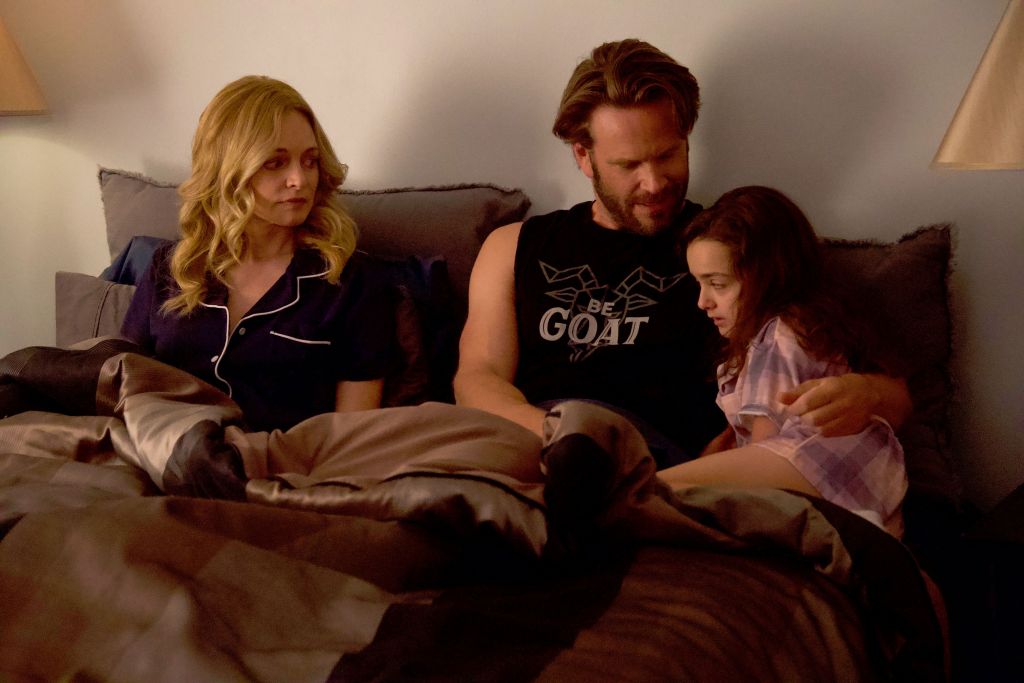
In her second film behind the camera, Chosen Family, multi-hyphenate Graham stars as Ann Fitzgerald, an unlucky-in-love yoga instructor struggling with the familial demands of a drug-addict sister (Julia Stiles), a religiously judgmental father (Michael Gross), and a mother (Julie Halston) who doesn’t much respect boundaries.
Still, Ann has a full life, and enjoys the love and support of a close group of friends (Andrea Savage, Thomas Lennon, Odessa Rae). When she meets Steve (John Brotherton), a contractor and divorced dad to daughter Lilly (Ella Grace Helton), it opens Ann up to the possibility of a life she hadn’t considered, while also introducing impracticalities and challenges that help nudge her into an overdue examination of some of her life choices.
The movie, which had its world premiere at the Santa Barbara International Film Festival earlier this year and is enjoying a theatrical and on-demand release via Brainstorm Media, trades on Graham’s effervescent charm and the warm chemistry she shares with her costars, while also digging into some hefty questions about life and mental health, related to who we determine to let matter most in our day-to-day lives.
Recently, Graham took some time to connect with Brent Simon via Zoom, to discuss her work on Chosen Family, and which joke from it might stand a chance of breakout mainstream success. The conversation is excerpted below, edited for length and clarity.
Question: The film deals with heavy themes, but also has a nice, light touch to it. How long did you live with the material as you wrote it?
Heather Graham: It took a long time, to be honest. Somewhere between like seven and 10 years, I wrote the script. I just kept writing more drafts and trying to find financing, and of course during all that time I was acting too. But it’s exciting whenever a movie gets made — it feels like a small miracle.
Question: Did the iterations of the script vary quite a lot, and was it difficult to find this (positive, laidback) tone that is very much is hand-in-glove and simpatico with Ann’s perspective on life?
Heather Graham: I mean, I think the basic storyline stayed the same, but I guess I just tried to tell it in the most entertaining, fun, concise way, and to make sure that all the characters you could kind of understand who they are. It was just a journey of letting a lot of people read it, giving me their feedback and then just finding someone to give us the money.
Question: Was Rhode Island, or sort of the Northeast in general, always kind of a setting in your mind?
Heather Graham: No, not really. I mean, it kind of felt like it could be set in any sort of medium-sized city, you know — any city that’s big enough to have a yoga community there. So that was just really where our financier lived, and it’s a really beautiful place. I definitely liked shooting there, it was very pretty.
Question: What lessons learned did you take from Half Magic that you applied to the physical production of this film?
Heather Graham: I think there was a degree where I felt a little bit more confident, and I wanted it to feel real and not worry about it being funny. Even though I wanted it to be funny, I very much wanted it to grow my filmmaking. I was trying to make a point that basically when you have a dysfunctional family, sometimes you can be attracted to those dynamics in your love life, even though it’s subconscious. So how do you heal that, and how do you break that chain and have a happy life?
Question: I thought that was well-summed up in that one line of dialogue, “A family is only as happy as its least happy person.”
Heather Graham: Right? Its least happy member — you’re like, oh yeah, that’s not good.
Question: I know you’d worked with Thomas before, but what was it like with Julia coming on board as a producer as well, and the rest of the casting process, because dealing with tight schedules and money on independent films is tough.
Heather Graham: Yeah, I mean the way that independent movies get made is usually they’re looking for a famous man. That’s how you can potentially get more money. But basically, Julia signing on and really loving script meant that actually her and I together got the movie financed. So I’m really grateful to her for joining us and lending her name and being part of it. We shot last year in May, and if I told you how many days… I mean, we were supposed to have 15 days, which is nothing basically, and we ended up with 14 because something happened and they needed to take away a day. So it is extremely hard to shoot a movie in 14 days, but I feel we did it and I’m proud of it.
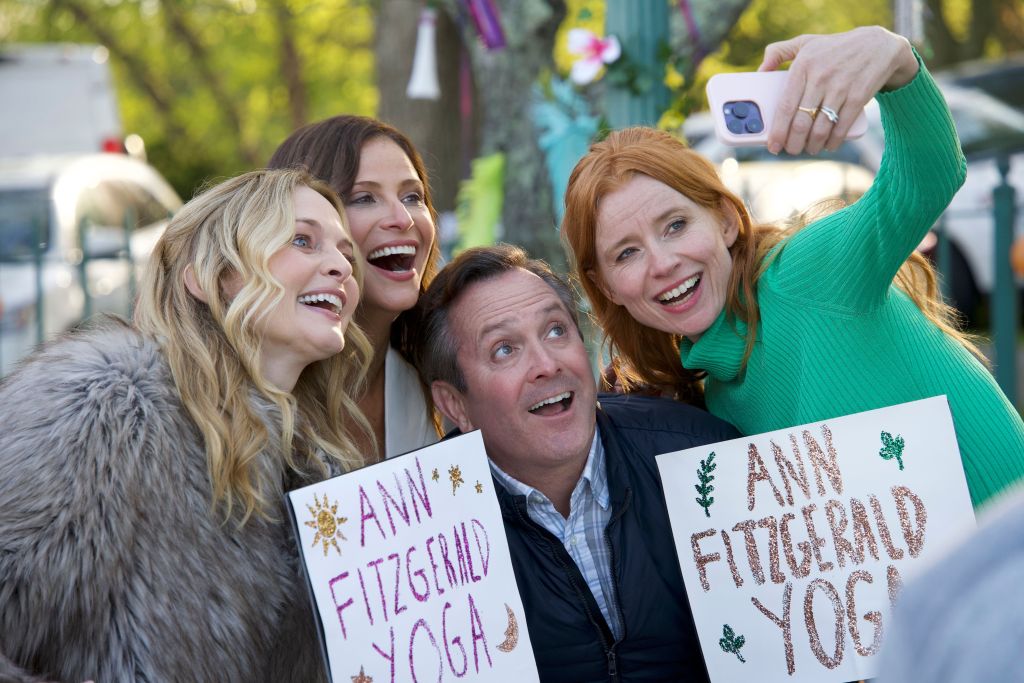
Question: At one point Ann is given advice to be relevant by her boss, and she stumbles into viral fame. It occurs to me that in an actress’s life, this is an ever-present piece of advice, right? Someone is always telling you what they envision your career to be versus maybe what you want it to be. With the benefit of some hindsight, do you look back and think, “Oh, maybe I should have done other things earlier that were relevant and most important to me?”
Heather Graham: Well, I do think looking back, because it is fun getting involved on the other side of the camera… you know, I went to college, I went to UCLA, I studied English, and sometimes I think, “Well, maybe you should have studied film.” Maybe I should have started making my own films when I was a lot younger instead of just going around hoping somebody else is going to tell the story that means something to me. I definitely admire someone like Issa Rae, who just like, “I want to make my own stuff and just put it on YouTube,” I really admire that. Or Frankie Shaw, who did SMILF. Women like that writing their own stories, I think that’s extremely cool.
Question: Which (joke from the film) do you think is most likely to catch on in the real world — would it be “punch-ilates,” or would it be “anal massage healing”?
Heather Graham: (laughs) It would probably “punch-ilates,” but with the anal massage healing tent, we were all laughing very hard on the day, it was really funny. That (scene) came about because I was at a party one time and there was this woman there who was like a tantric coach and she was talking about the anal healing massage, and I was with these friends, including these guys who were really funny, and they all just couldn’t stop talking about it, like, “What’s the anal healing massage?” So it just stuck in my head as this funny thing.
Question: But no one submitted to it for the purposes of research, to actually find out exactly what it was?
Heather Graham: Not on the day, you know, but I did read some different tantric sex books and that is in the books — they talk about the anal healing massage. But no, we did not have anyone on set actually have one. (laughs) That I know of — maybe some people were doing it in the privacy of their own homes.
Question: What’s next for you? You’re obviously acting as well, but do you have something in mind as a writer-director that you’re also working on?
Heather Graham: I do, I do. I am working on a new script and I’m excited about it. And I’m shooting a film right now in South Africa called They Will Kill You, which is a kind of scary movie that’s got action and comedy. It’s a good script.

