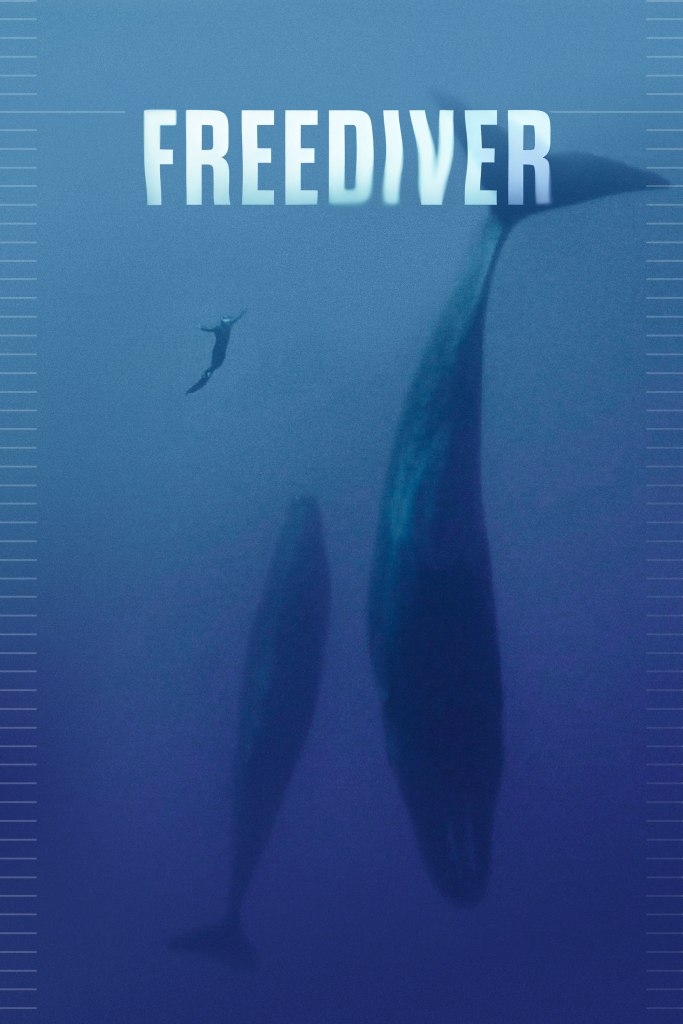
The most powerful satisfaction of partaking in sports isn’t winning – it’s finding the balance between mind, body and earthly elements. The new documentary, ‘Freediver,’ highlights how equilibrium is the true essence of not only freediving, but sports in general. The world’s top athletes embrace that spirit as they embrace a deeper understanding of their thoughts and experiences.
Russian freediver, Alexey Molchanov is exploring how the sport not only provides him joy, but also how it serves as a means of human survival and evolution. He also engages in the sport as it helps him ponder the overall meaning of life.
‘Freediver,’ which is based on the GQ article ‘Secrets of the Deep’ by Daniel Riley, explores how geopolitics forced Molchanov, who’s considered by many to be the world’s greatest living freediver, into exile. The athlete, who’s the son of freediving pioneer Natalia Molchanova, spent 2023 on a journey to reclaim his athletic glory. He also set out to honor his iconic mother’s towering legacy by attempting the most dominant season in the history of the deadly sport.
His near-suicidal quest to set five world records in under four months brings him to the farthest reaches of the world and to the very edges of human performance. In the process, he’s forced to reevaluate all the skills and beliefs on which he has built his entire life.
Michael John Warren wrote and directed the film. He also served as a producer, along with Picturestart, Skydance Sports, GQ Studios and Boardwalk Pictures. The movie is now available on Digital platforms, courtesy of Paramount Global Content Distribution. The filmmaker generously took the time recently to talk about helming and producing the project during an exclusive interview over Zoom.
Film Factual (FF): You directed and produced the new documentary, ‘Freediver,’ which is based on the GQ article Secrets of the Deep by Daniel Riley. What was your inspiration in making the film?
Michael John Warren (MJW): So there was an article in GQ that caught the attention of some friends of mine in Hollywood, at a company called Boardwalk Pictures, who I work with as often as I can. They called me up and said, “Hey, read this article. Do you want to make a film about it? If you do, we do.”
So I read the article and I was like, “This sounds really hard and really exciting. I’m not sure I’ve quite seen anything like this before.”
I couldn’t quite figure out how I was going to do it. So I said yes because I’m at a point in my career where I’ve done a lot. I’m looking for challenges at this point in my career, and this was definitely a challenge. (Warren laughed.) I wondered if I had bitten off more than I could chew a couple of times while making this film.
So we just jumped in. We were lucky enough to get (production company) Skydance and Picturestart on board. Our friends at Condé Nast and GQ also helped support us. We got the whole team assembled and we just attacked it.
FF: Once you begin working on the movie, what was your research process like, besides reading the GQ article, of getting to know more about Alexey’s life and career?
MJW: It was a lot of reading. I love that stage of a project, honestly – just reading up and trying to understand a culture that I might not completely know much about yet. I also love trying to understand a sport and how it’s scored, as well as what’s actually happening in the human body as you do these death-defying acts.
I made sure to put that early in the film. I wanted people to understand what actually happens when you do these things, because it is not something that normal people would do on purpose.
So we just dug into the books. There’s not a lot of writing around freediving, actually. So it was pretty easy to get through the research side of the movie.
So we spoke to different journalists and freedivers. I was hashing the story out with my story team and my editor. We started putting up cards on a board. We work digitally now, but we were working to really see how this could be a film.
We also tried to understanding his mother’s story. I don’t want to say her story is more important than his story. Even though the film isn’t about her, she plays an incredibly important and fundamental role in this film. But making sure we understood who she was and how she plays a role in his life was so important.
FF: Going back to the fact that you helmed ‘Freediver,’ how did you get everything together as the director? What was your just overall approach to helming the movie?
MJW: I’m writer, director and producer of this film. To be honest, I‘m kind of writer, director and producer on every film I do; I just don’t always get the credit, if I’m being candid.
But the process was methodical on some level, but I was also feeling really inspired. When you’re an artist and you’re inspired, there’s not much that can stop you.
So we just really dug in. Like I said, I started imagining what the film would be before I shot any of it by placing cards and seeing how it could roughly go.
The thing about documentaries, you can make all the plans you want. But it’s going to change when you start filming it and it’s going to change again once you start editing and re-editing it. It’s going to change again when your partners give you notes.
So you just have to stay flexible. I like to believe that I am flexible and that I’m always open to recognizing when I’m out in the field and I thought I was filming this, but things change. This just happened and this seems like it’s going to be even more important. It then hits these other things you didn’t expect.
I was an editor before I was a director. So I think I have a little bit of an advantage to some other directors who don’t have a mastery of documentary editing. I can literally just see something happening in the real world and know how it’s likely going to affect the remainder of the film as it’s happening.
So, like I said, redirecting our priorities in production and the edit is so important. It was a really involved process. I was right about some of the things I thought were going to happen and I was wrong about some of the other things.
You’re doing this version and that version. You keep going until finally you’re like, this is it. We did it.
FF: Further speaking about producing in addition to directing this type of documentary, how did you balance both jobs during the feature’s production?
MJW: Like I said, I’m a bit of a weird one in that world. I’m producing because I am making a lot of decisions. But I’m more of a creative than I even really am a producer, as far as like money and logistics go.
I’m smart enough to have a lot of really smart people around me who help me get over the hump on all these different things. So again, I had a really great group of partners and a really strong production team.
Shout out to Nan Sandle, who was heading the production arm of this production – I’ve known her for years. We’ve been around the world together, doing crazy projects for a really long time. So we’re in constant communication about the creative and the logistics, including the budget. We do all of those things at once.
I say I’m a creative, but I’m a creative who understands that you can have all the ideas you want, but you also have to deal with time and money. To really have the best creative product, you have to be respectful of time and money because those things are real.
FF: While you were shooting ‘Freedive,’ what was your experience like also working with your Director of Photography, Jeff Louis Peterman, to determine how you would shoot the freediving, as well as create the visuals for the film?
MJW: It‘s about as hard as you can possibly imagine filming a documentary can be. We were filming hundreds of feet under the water. We were filming world records, so they were going to happen one time. There is no redoing of a world record in a sport, so it was really challenging.
Jeff Peterman is a really great director of photography, as he’s very organized, really talented and can just step into the chaos of anything and stay calm and focused. I think we were a great team in that. He also built a strong team around him.
The process was tough, I’m not going to lie. This was not an easy film to make. We took 22 different airplanes and were in eight different countries. I was on so many boats, I couldn’t possibly count them all. It took three years of my life to make this film.
We also had a really nasty run-in with a super typhoon in a remote island in the Philippines at the same time. So a lot got thrown at us in this process.
Again, shout out to my crew and my producers for sticking it out with me and really believing in me. They really helped me film this incredible story.