
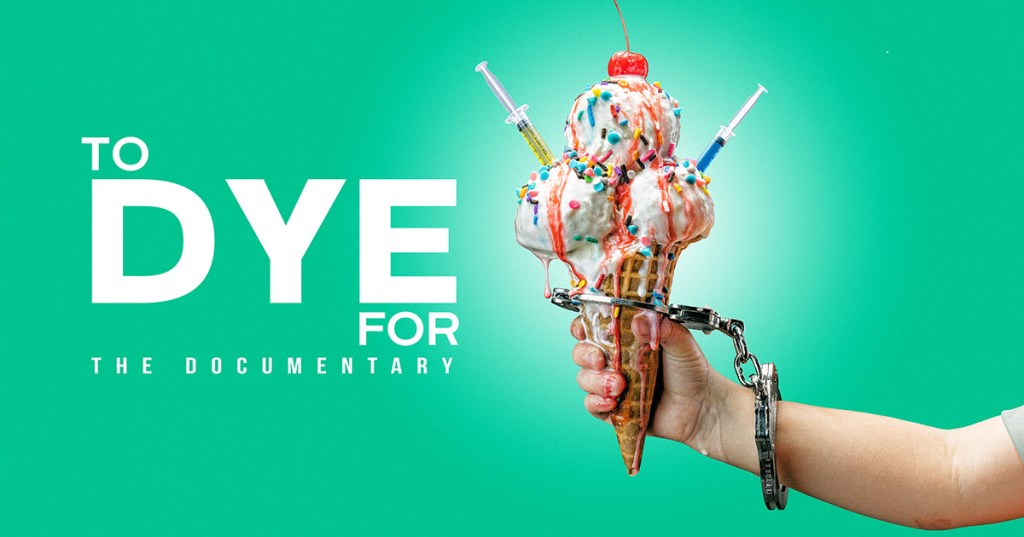
The nonfiction offering To Dye For opens with a chunky block of text that reads a bit like a legally negotiated disclaimer, noting that the film contains re-enactments based on actual events and stories, but featuring actors and “not the individuals who experienced the events or conditions depicted.” It goes on to note that the movie is for educational and informational purposes only, and not intended to provide legal, medical or professional advice, before pivoting to also toss in a Bible verse (Proverbs 31: 8) in setting up its exploration of the potential dangers of synthetic food dyes.
These elements, honestly, are not particularly auspicious signs for a documentary that might want to be taken seriously outside of a self-selecting audience. But To Dye For, through a process of steady narrative trust-building and savvy personal framing, slowly comes into focus as an even-headed work. The end result, striking a nice balance between anecdotal stories with individual data sets and enough broader scientific input to give the movie a graspable factual mooring, accrues sympathetic agreement in viewers by way of a tone that is more positive-minded than scolding, reactive, and/or overcharged.
Dalton, Georgia-based director Brandon Cawood, an advertising photographer and cinematographer by trade, centers himself, his wife Whitney, and their young family, laying out how their son Atreyu, after being a happy and well-mannered baby, became “a bit of a puzzle” between ages one and three.
For a couple minutes — when Whitney talks about starting a Facebook group — things seem certain to tip over into navel-gazing frivolity and exasperation. (Pro tip for all would-be documentarians: the phrase “I started doing some research” conveys the opposite of intended seriousness, no matter the individual sincerity.) But To Dye For rights it ship in short order, detailing how the Cawoods instituted a dietary overhaul for Atreyu in which they eliminated all wheat, dairy and synthetic food dyes, and then reintroduced the first two. Their son’s behavioral problems all quickly normalized.
From there, interspersed with other first-person tales about diagnoses of children with ADHD, anxiety and OCD that didn’t quite connect or make sense with each family’s lived experiences, To Dye For serves up an explanation of what synthetic dyes are and why they’re used (short answer: to make foods prettier, and easier to sell). This material includes a thumbnail history of Congressional color additive amendments from 1958 and 1960, showing how the Food & Drug Administration is historically not terribly proactive about removing substances once approved (despite, for example, a 1990 study showing that red dye number 3 causes cancer in animals).
Interviewees like the Center for Science in the Public Interest’s Thomas Galligan (who is shot at a willfully odd angle throughout) provide valuable context, while Dr. Joel Nigg, a clinical psychologist known for his research on hyperactivity disorders, and Dr. Jim Stevenson, who oversaw a randomized control trial in the United Kingdom, help explain a system whereby dyes are passively accepted in food products because they only induce small changes on average, even though much more of a reaction in some children based on genetic factors.
Karalynne Call pops up to tout the journey that led her to create Just Ingredients, a health and wellness brand with a range of products free from both artificial additives and added sugars. California State Senator Bob Wieckowski, meanwhile, is presented as a quasi-heroic figure, given his sponsorship of two state bills to ban dyes that (owing to California’s size and economic might) could augur changes in national food labeling.
What gives To Dye For most of its emotional punching power, though, are indisputably its personal testimonials, which ring deeply, searingly true. Presented in no-frills fashion, most of these stories come from beleaguered and despairing mothers like Emily Snow, Carly Bartee and Dr. Rebecca Bevans — the latter of whom is a professor of psychology who gained some notoriety from her TED Talk on the topic of synthetic dyes. Listening to these tales of kids acting out (and in some cases even expressing suicidal thoughts), one can’t help but have enormous sympathy for their family struggles. But when the movie expands to include the perspective of Bevans’ now young-adult son, Alex, his words give the film an added dimension of relatability.
Some bits (like a taste test segment with friends) land as a waste of time, but these alleyways of digression are few and far between, and at a brisk, smartly paced 83 minutes, Cawood’s film doesn’t overstay its welcome. While it would have been interesting to see the results of trying to more doggedly chase down corporate comment and explanation for publicly announcing the removal of synthetic dyes and then reversing course (as both General Mills and M&Ms did within the last decade), To Dye For is a thoughtful and interesting look at some of what we eat, and how rapacious consumerism shapes choices available to us all. It slots comfortably in the “food-chain consciousness” sub-genre of nonfiction health and wellness films.
Housed in a regular DVD case and released via Kino Lorber, To Dye For is presented in a 16×9 aspect ratio, with a 2.0 stereo audio mix that more than adequately handles the title’s straightforward aural design and light-lift demands. With a static menu and no chapter stops, the disc includes no supplemental features, save a collection of trailers. While that’s perhaps a bit of a bummer, given the seemingly hand-in-glove opportunity for, say, educational add-ons or additional interview material that would be of definite interest to viewers, it’s not a dealbreaker for those either seeking chiefly to plug into a cause in which they already have confirmed interest and belief, or purchase a slice of feel-good proselytizing to gift upon others.
In addition the trailer for To Dye For itself, some of the trailers for other movies, like Thomas Pickering’s I Could Never Go Vegan, present as like-minded, with a similar thrust or focus on health, social, and/or environmental topics. Others, however, have a broader lens, like In the Company of Kings, which finds a collection of eight former boxing champions dissecting not only some of their career highs and lows, but also perseverance, issues of race, and more. For more information about To Dye For and/or to purchase the DVD, click here.
 Film Factual
[…] On IMDb, it holds a 6.0/10 rating based on 272 reviews, reflecting a mix of acclaim and critique. (IMDb) Positive viewers have called it “incredibly eye-opening” and “a must-watch for anyone concerned about health and well-being,” noting its capacity to inspire change. (IMDb) A more measured review from Film Factual commends its balanced tone, praise for personal storytelling, and thoughtful integration of broader context, even while acknowledging limitations in scope and confrontation. (Film Factual) […]
LikeLike