
The most self-aware characters choose love over hate, compassion over anger, and peace over violence, no matter how deeply they’re affected by the forces reshaping the world around them. That’s certainly true for the protagonist in the new dark comedy, ‘The Tree of Knowledge,’ as the titular tree becomes a symbol of free will and moral choice
The absurdist film explores the tension between anger and compassion, vengeance and forgiveness, and agency and moral responsibility. The biblical symbolism in the spiritual fable uses fantasy and magical realism to ponder what it truly means to choose good over evil. Beneath its surreal premise and deadpan humor lies a meditation on spiritual renewal. The movie suggests that personal transformation begins not through retribution, but through the conscious choice to embrace love, empathy and hope in a fractured world.
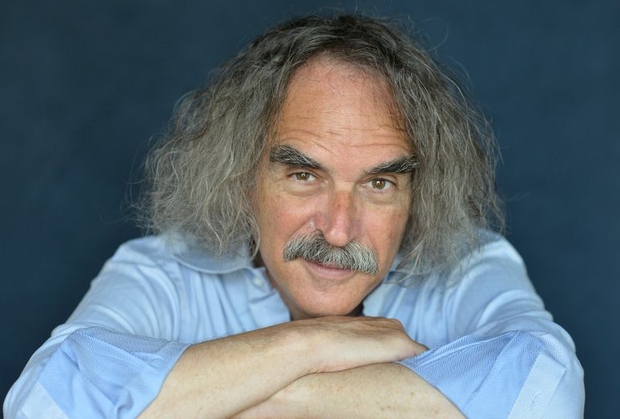
Eugène Green directed the Portuguese and French movie, which is in Portuguese with English subtitles. The dark comedy stars Rui Pedro Silva, Ana Moreira, Diogo Dória and João Arrais.
‘The Tree of Knowledge’ follows Gaspar (Silva), a young man living in the outskirts of Lisbon who sets out for the capital city in search of something new. There, he encounters an enigmatic figure named Ogre (Arrais) who has seemingly made a pact with the Devil, giving him the ability to turn people into animals.
Initially complicit in capturing tourists and handing them over to be transformed, Gaspar befriends a donkey and a dog. After things start to spiral out of control, Gaspar decides to escape before the animals are ultimately slaughtered. They find refuge on a secluded farm in rural Portugal, where they encounter a series of mythical and historic figures, all the while being chased by Ogre and his minion Leitão (Piglet).
With his signature style of theatrical performances and still frames, Green weaves a rich narrative that mixes dark fable with social satire, blurring the lines between past and present with references to Portuguese folklore and history, and hinting at timeless struggles of power and transformation through magic realism and the supernatural. Through surreal imagery and absurd situations, the filmmaker evokes a profound spiritual and philosophical contemplation on Portugal’s current social crisis largely created by inequitable government policies and economic disparities.
For Green, these philosophical questions emerged from a deeply personal response to the transformation of Lisbon, a city he watched change under the pressures of mass tourism and gentrification. What began as an expression of anger evolved into something far more nuanced as Green found himself rediscovering the city’s enduring beauty. That shift reshaped ‘The Tree of Knowledge’ into a story in which justified rage must ultimately give way to compassion if one hopes to resist becoming the very evil they oppose.
‘The Tree of Knowledge’ is set to have its World Premiere at Fantastic Fest tomorrow night, September 18 at 8:45pm CT in Theaters 1 and 3 at the Alamo Drafthouse Cinema South Lamar in Austin. The movie will then have its second screening next Tuesday, September 23 at 6pm CT in Theater 8.
In honor of the film’s premiere, Green generously took the time earlier today to talk about scribing, helming and producing the feature during an exclusive interview over Zoom. Among other things, the filmmaker discussed how ‘The Tree of Knowledge’ grew from his reaction to Lisbon’s transformation under mass tourism into a surreal fable. He also reflected on his distinctive filmmaking approach, from his meticulously envisioned visual style and minimalist direction of actors to the collaborative process of bringing the film to life.
Film Factual (FF): You wrote the script for the new dark comedy, ‘The Tree of Knowledge.’ What was your inspiration in penning the screenplay? How did you approach scribing the script?
I got the idea in 2017 when I was in Lisbon for the shoot of a short film, How Fernando Pessoa Saved Portugal. One evening I was walking alone in Lisbon and was in a garden that I like very much, which you see in the film: the Garden of Santa Clara. It’s where Gaspar sees the Coa River for the first time and where he’s kidnapped.
I was very shocked by the changes in Lisbon because of tourism over the preceding years. The idea came to me about an adolescent boy who runs away from home and is kidnapped by a person called the Ogre, who has the capacity to change people into animals.
The rest of the story came while I was writing the script.
FF: Besides writing the screenplay, you also directed the film. What was your overall approach to helming the production??
EG: I’ve made about ten feature films and a number of shorts, so there were no surprises.
I had to wait a very long time because I wrote the script in 2017 and we shot it in 2024. The difficulty was finding funding.
Once production started, there was the preparation. I had a very good crew in Lisbon, including several people I had already worked with before, such as my first assistant and the continuity supervisor.
In terms of choosing the actors, I knew all of the adult actors from Portuguese cinema, and some from French cinema as well. Two of them I had already worked with, so it was familiar territory.
Finding the lead actor was more difficult because he was very young and not someone I had seen in films or theater. He was still in acting school. We held auditions, and once I met him, I knew he was right for the role.
Once we started working, everything went very well. The cinematographer, Rafael Urbano, has done the image for all of my films from the beginning, so there were no surprises there either. It was a beautiful and enjoyable experience.
FF: Speaking of the cinematography, the imagery in the film is really unique and insightful. What was it like reuniting with Rafael Urbano to develop the visual approach for ‘The Tree of Knowledge?’
EG: I have a very specific visual language that I discovered with my first film, ‘Toutes les nuits,’ more than 25 years ago.
I see the images when I write the script, which is unusual. Most directors don’t work that way. I describe the images in the script.
Since Rafael Urbano has worked with me for more than 25 years, he knows exactly what I want. When he reads certain descriptions, he understands immediately. I trust him completely.
He creates the framing and lighting and then shows me the result. I almost never have corrections because we understand each other perfectly.
This visual language, with symmetrical images and many shot-countershot compositions focused directly on the actor, is something I have used since my first film.
FF: Once you cast the main roles, how did you work with the actors to build the characters, especially the newer performers?
EG: I don’t want actors to create psychological representations of their characters because that approach is intellectual and often feels forced. Instead, I try to capture their interiority within the character’s situation.
That’s why I ask them to say the text as though they were speaking to themselves. They avoid rhetorical effects. The words simply pass through them, and those words create emotions that I hope to capture on screen.
We don’t rehearse very much. We do a few script readings together, and I ask them not to use psychological intonations.
In many films, particularly American films, actors use highly codified intonations that are supposed to feel realistic but actually don’t. They speak in ways that people wouldn’t naturally speak.
I ask them to deliver the lines naturally and without emphasis.
Before each shot, we rehearse briefly. Once I feel they are comfortable, we begin shooting.
Sometimes the first take is the best take. Not always, but often. I don’t shoot many takes because once I have two takes that satisfy me, I know that’s enough. Our budget and shooting schedule also don’t allow for many takes.
FF: When working with the actors, what was the experience of blending dark humor with the fantasy and dramatic elements of the movie?
EG: All of that is already in the script. It’s in the text.
I ask the actors to follow certain principles in how they deliver the dialogue, and then those elements emerge naturally.
For example, João Arrais, who plays the Ogre, also does a lot of theater. Sometimes he can be very exuberant, so I ask him to be calmer and then we do another take.
Usually it comes naturally, especially with Rui Pedro Silva, who plays Gaspar, and Ana Moura, who plays Queen Dona Maria.
With them, we understood each other perfectly. It was rarely necessary to give notes. When I did give Rui a note, he immediately understood what I wanted. The next take was perfect.
FF: While filming The Tree of Knowledge,’ what was the process of choosing locations and creating the production design?
EG: We prepared all of that before the shoot. My first and second assistants helped me a great deal. Since I was in Paris during much of the preparation period, they conducted location scouting in Lisbon. They filmed different places and sent me photographs and videos.
I eliminated some locations, and when I arrived in Lisbon, we visited the remaining ones together. That allowed me to choose the places that most closely matched what I had imagined.
They showed me many palaces and manor houses in northern Portugal because there are so many there. The palace where many scenes take place is located about 45 minutes outside Lisbon. This one was the one I liked the most.
It also had an important impact on the budget because everyone except me could return home to Lisbon each night. That reduced costs significantly.
FF: ‘The Tree of Knowledge’ is set to have its World Premiere at Fantastic Fest in Austin tomorrow night, September 18. What does it mean to you to share the dark comedy with audiences there and hear their reactions?
EG: At first, I was surprised because I don’t consider the film a genre film.
At the same time, I discussed it with the two producers, Luís Urbano, the Portuguese producer, and Julien Naveau, the French producer. We concluded that it would be interesting to present the film to audiences who might never have seen it otherwise and to broaden its audience.
I’m very interested in hearing how audiences react. It’s screening alongside vampire films and horror films, and it’s not really that kind of film. If those same audiences respond well to my film, I’ll be very happy.
 Film Factual