
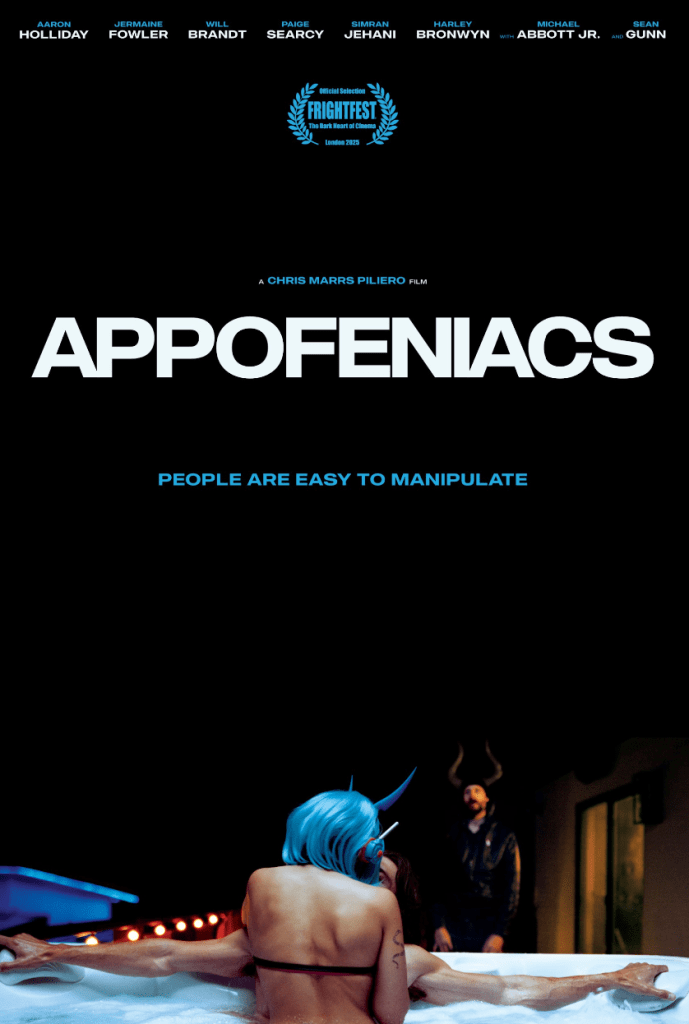
Appofeniacs
Writer: Chris Marrs Piliero
Director: Piliero
Cast: Sean Gunn, Jermaine Fowler, Aaron Holliday, Michael Abbott Jr, Simran Jehani, Amogh Kapoor, Will Brandt, Paige Searcy and Harley Bronwyn
Opens: North American Premiere, Saturday, September 20, 2025 at 2:30pm CT at Austin’s Alamo Drafthouse Cinema South Lamar Theater 4 during Fantastic Fest 2025; Second screening on Thursday, September 25, 2025 at 2:00pm CT at Alamo Drafthouse Cinema South Lamar Theater 5 during Fantastic Fest 2025
Few horror films feel as frighteningly relevant as the new tec thriller, ‘Appofeniacs.’ More than science fiction, the movie plays like a disturbing reflection of the present, examining how artificial intelligence, deepfakes and manipulated media fuel viral misinformation. Overall, the dark satire explores what happens when someone with no conscience gains the power to rewrite reality with just a few taps on a smartphone.
Chris Marrs Piliero wrote, produced and made his feature film directorial debut on ‘Appofeniacs.’ The thriller stars Sean Gunn, Michael Abbott Jr, Aaron Holliday, Jermaine Fowler, Will Brandt, Paige Searcy, Simran Jehani and Harley Bronwyn.
‘Appofeniacs’ follows Duke (Holliday), a deeply cynical troublemaker whose fascination with deepfake technology evolves into a campaign of chaos. Armed with an AI app and a complete disregard for consequences, Duke creates fake videos and images simply because he can. What begins as digital mischief rapidly escalates into a series of catastrophic events that ripple through the lives of strangers who have never met him.
Piliero structures the movie as a collection of intersecting storylines, each connected by Duke’s reckless actions. Among those caught in the fallout are Poppy (Jehani), a cosplay enthusiast heading into the desert for a fun weekend with friends; Clinto Binto (Gunn), an eccentric costume designer determined to protect the value of his craft; and Lazzy (Searcy), a quick-witted woman whose decision to engage in a seemingly harmless argument while waiting for coffee spirals into something far more dangerous.
What makes ‘Appofeniacs’ particularly effective is its story arc. Rather than relying on a traditional single-protagonist narrative, Piliero embraced an ensemble approach that allows the drama to examine deepfake technology from multiple perspectives. Each storyline initially appears disconnected, but as events unfold, the audience gradually realizes how deeply intertwined these characters are. The result is a narrative structure reminiscent of ‘Pulp Fiction,’ where separate threads collide in increasingly explosive and unexpected ways.
The film’s greatest strength lies in how it transforms an abstract technological concern into deeply personal horror. Duke is not a mastermind villain plotting global domination; he’s something arguably more frightening. He proves to be an ordinary person empowered by technology. His actions are driven less by ideology than by boredom, ego and a desire for amusement. This grounding in reality makes the thriller’s escalating violence and paranoia feel disturbingly plausible. As the story progresses, viewers are forced to confront the uncomfortable truth that the events depicted on screen are not only possible but may already be occurring somewhere in the world.
The filmmaker’s screenplay is packed with sharp observations about modern digital culture. The title itself references apophenia – the tendency to perceive meaningful connections in random events. This concept becomes the thematic backbone of the movie. Characters constantly misinterpret information, jump to conclusions and accept fabricated evidence as truth. In an era where manipulated content spreads faster than facts, ‘Appofeniacs’ argues that technology alone is not the problem. Human psychology is equally responsible.
The drama’s social commentary never feels preachy because it is delivered through entertainment. Piliero understands that audiences absorb ideas more effectively when they’re consuming entertaining. The pacing is blisteringly fast, with one unusual situation bleeding seamlessly into another. The dialogue driven by energy, and while some of the stylized banter occasionally feels exaggerated, the overall momentum is so strong that any minor missteps are quickly forgotten.
The cast deserves enormous credit for maintaining the film’s delicate balance between horror and comedy. Aaron Holliday is exceptional as Duke, creating a character who is simultaneously amusing, infuriating and deeply unsettling. He captures the casual cruelty of online culture with remarkable precision, portraying someone who views human lives as little more than content.
Gunn delivers one of ‘Appofeniacs’s most memorable performances as Clinto Binto. The actor’s natural charisma and eccentricity make every scene enjoyable. Searcy, meanwhile, brings sharp comedic timing and emotional authenticity to Lazzy. Jehani also thrives, giving Poppy a relatable humanity that grounds some of the thriller’s more outrageous moments. Supporting performances from Abbott, Fowler, Brandt and Harley Bronwyn further enriched the ensemble.
Visually, ‘Appofeniacs’ is a triumph, especially in regards to the cinematographer, Adam Leene. Piliero’s background in making music videos allowed him to effortlessly work with the film’s cinematography. Every frame feels purposeful, dynamic and alive with energy. The camera movement is fluid and kinetic, heightening both suspense and absurdity. Bright neon colors clash with shadows and blood-soaked imagery, creating a visual style that perfectly complements the story’s blend of satire and horror.
The cinematography deserves special praise for how it mirrors the thriller’s themes. Screens, reflections, recordings and digital interfaces are incorporated organically into the visual language, constantly reminding viewers that reality itself has become unstable. The movie’s Los Angeles setting is captured with a mixture of beauty and menace, transforming ordinary locations into spaces charged with paranoia. Even quiet scenes carry an undercurrent of unease, as though danger could emerge from any smartphone notification at any moment.
The practical effects are another standout element. In an era dominated by digital effects, ‘Appofeniacs’ embraces old-school gore with enthusiasm. The stunts are outrageous, creative and often darkly funny. Yet the bloodshed never feels gratuitous. Each shocking moment reinforces the central idea that seemingly trivial online actions can produce devastating real-world consequences.
As the various storylines converge, the drama builds toward a gloriously chaotic finale. The climax is equal parts horrifying, hilarious and cathartic, delivering the kind of crowd-pleasing madness that midnight movie audiences crave. Piliero expertly orchestrates the collision of characters and conflicts, bringing the narrative threads together in a way that feels both surprising and inevitable.
Beyond its entertainment value, ‘Appofeniacs’ succeeds as a cautionary tale. It highlights the growing crisis of media literacy and challenges audiences to question their assumptions about what they see online. The film understands a frightening paradox of the modern era: people are more aware than ever that images and videos can be manipulated, yet they remain eager to believe whatever confirms their existing biases.
Few horror films capture the anxieties of their moment as effectively as ‘Appofeniacs.’ It is wildly entertaining, sharply written, visually striking and uncomfortably relevant. Piliero has crafted a technohorror thriller that is not only memorable but genuinely thought-provoking. By combining a clever story arc, exceptional cinematography, strong performances and timely social commentary, ‘Appofeniacs’ emerges as one of the most distinctive genre films of the year.
In a landscape crowded with AI stories about rogue robots and sentient machines, ‘Appofeniacs’ chooses a far scarier path: showing what happens when ordinary people gain extraordinary power over the truth. The result is a funny, bloody, nerve-rattling ride that lingers long after the credits roll.
Technical: A
Acting: A-
Story: A
Overall: A

