
Revealing an inspiring tale of identity and heritage in a community that’s balancing economic hardship with deep cultural richness crafts the most personal documentaries. That’s certainly true with the new movie, ‘Glendora,’ which is the product of five years of collaboration between filmmaker Isabelle Armand and the residents of the titular small American town.
Armand, who wrote, directed, produced and served as the cinematographer on the documentary, situated the lives of Glendora’s residents within a broader national context. The filmmaker also reflects on the Mississippi town’s history of racial injustice, economic neglect and structural inequality in the feature. As it chronicles daily struggles and moments of connection, the project highlights how the community continues to organize, remain connected and work toward shaping its future despite persistent challenges.
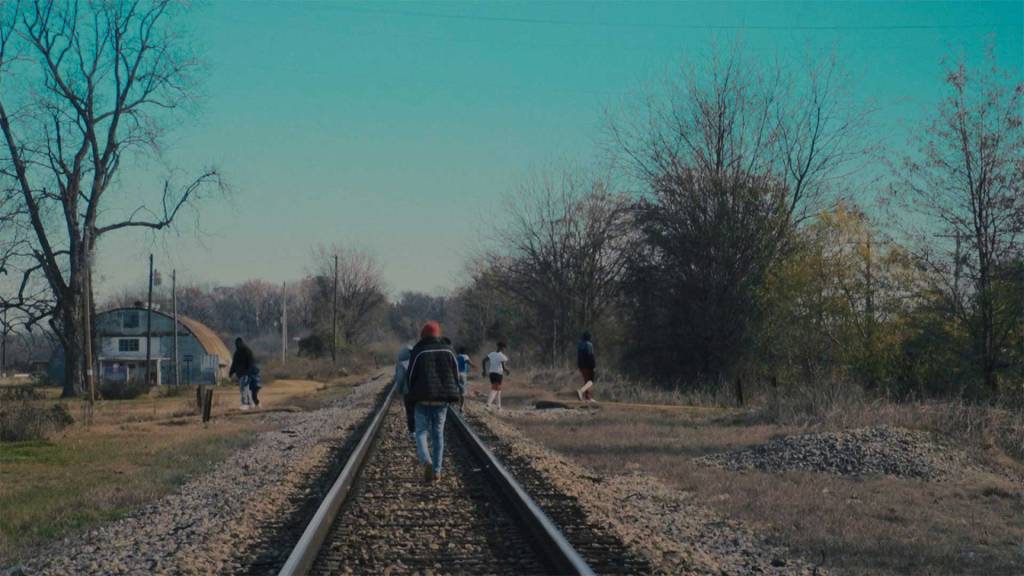
Set in the heart of the Mississippi Delta and shot over the course of five years, ‘Glendora’ showcases the eponymous village, which is quiet and remote on the surface. But beneath its stillness lies a vibrant, tightly knit African-American community whose strength, resilience and creativity thrive despite chronic scarcity.
‘Glendora’ will have its World Premiere on Friday, January 16 at 7pm EST during Dances With Films: NYC 2026. The screening will be held at Regal Union Square during the festival’s fourth annual event in New York. For more information on the movie, visits its page on Dances With Films’ official website, as well as the feature’s official website. To help promote the documentary’s premiere, Armand generously took the time to talk about penning, helming, shooting and producing the project during an exclusive interview over Zoom.
Film Factual (FF): You wrote the new documentary, ‘Glendora.’ Why were you interested in making a movie about the titular town, and offer an intimate portrait of life in an area where economic fragility meets profound cultural wealth?
Isabelle Armand (IA): My inspiration for making the film is the people in it. It came about from a previous project, where I spent three hours away from Glendora, doing a photo documentary about two men who were wrongfully convicted.
It’s also a very rural area of Mississippi. So through these two men, I was absorbing, and sharing in, the family’s life. Over the course of five years, I discovered the culture and the music people would listen to there.
I also heard so many stories. When I went to interview some older residents, I would find out that they were telling me stories that their children didn’t know.
So that made me start to think about why stories weren’t passed down in underserved areas with a certain past. I noticed that having less can make you transient in those places. If your family has moved from plantation to plantation and leave everything behind, you may lose a lot of things that you can’t pass on to your children. You may even lose stories that you may not think are so positive to pass on to your children.
But I was starting to wonder why these stories weren’t being passed down. I thought the stories and culture were so rich. So I thought I would research a very small community. That turned out to be Glendora. So I went to Glendora, and it was wonderful.
FF: Speaking of the research process, how did you gather more information about the town of Glendora during the film’s pre-production?
IA: For me, it was a matter of the town’s size. I knew I could do it in a very small community, but I couldn’t tell the story of a thousand people, for instance. So I started to focus more on the economics in this rural town, which is very isolated because it’s a delta and very agricultural. Basically, that was the only research I’ve done. I wanted to really dig in after my first project. While doing so, I realized that this can connect the past to the present.
So I just walked in there and talked to the mayor a couple of times. There are also all the people in town, so I just went and introduced myself. I hit it off with quite a few people during the first week. From there, I built other relationships.
FF: Speaking of engaging in conversation with the people who live in the community during the shoot, how did you build relationships with them and have them agree to tell their personal stories?
IA: It was very easy. Maybe that was because I was somewhat familiar with rural Mississippi. So I was very happy to be there and meet everybody.
I just walked in and got to know them. During that time, I showed them my first book, and asked them if they wanted to participate or not. Some people didn’t, but they’re all still my friends.
I spent all my time with my friends there. That’s how you get to know everyone – you sit around with them.
That’s also how you see how the town lives. There were some people who I could easily follow and work with. Other characters had secondary stories.
It all happened smoothly. It was a wonderful experience.
FF: Besides penning the film, you also served as the director on ‘Glendora.’ How did you approach helming the project during the shoot?
IA: One of my goals with the film was to share the experience I have when I’m in a community like this, where you can see and hear their talents and stories. One thing that’s very important for me when I document is to not directly be in the environment myself.
Some people don’t want to be on camera. So once I get to know who they really are when they’re not on camera, and they realize I’m not going to film them, we build a trust that’s so important. Eventually, we built such a trust that some of those people finally became more comfortable with the idea of being on camera.
During the interviews, I would just set up the cameras for interviews and let people talk. We wouldn’t interfere while they were filming, and their interviews turned out great.
FF: Besides penning and directing the film, you also served as the cinematographer. How did you determine how you would visually shoot the documentary?
IA: Well, I’ve been a photographer for over 25 years now, and have really been wanting to film for quite a while. With this particular story, even when I was developing and writing the story for grants, I could already see the aesthetic.
But for me, it’s not just about the visual aesthetic; it’s also about if I can convey some emotional clues and information in the story. I also wanted to see if I could separate the people from some of the circumstances we see there because to me, that’s also very important.
Overall, I like minimal visuals because that’s when I feel like visuals can become filled with emotions and information. Hopefully, it’s not just in my imagination!
FF: Tamiris Lourenço served as the editor on ‘Glendora.’ How did you collaborate together to put the final version of the movie together?
IA: The editing process was magical, but I did have quite a few months of anxiety because we had to find the right person. Obviously, I shot the film a certain way, and the right editor is going to see that. My editor, Tamiris Lourenço, is also my co-writer for this reason. She could read my mind through the footage.
So when we edited, it was incredibly easy. We were incredibly surprised because we thought we were going to have a couple struggles because we were interweaving narratives with life in Glendora.
But that never happened. We basically had our structure and our pace from day one. All we did was eliminate some stuff. I‘m really grateful for that because I was definitely with the right person. So the editing process was as magical as the experience of filming and being in Glendora.
FF: You also served as a producer on the film. How did you balance producing and helming the documentary throughout the production?
IA: Well, I was producing the film by myself, so I had to do it all. But I was ready for it, as I knew what it was going to be like that.
So I just did the work. If you do the work, you’re going to get your results.
There hardly was any production, except for me moving my equipment and setting it up, but it worked out fine.
FF: ‘Glendora’ will have its World Premiere at Dances With Films: NYC on January 16. What does it mean to you that the movie is screening at the festival?
IA: I’m really happy. We started this in 2018, so it was eight years’ worth of work. So for me, it’s like, it was an. idea eight years ago, and here it is, and I can show it now.
I’m also happy that we’re having some of the participants from the film attending the screening in New York, including Ms. Florida’s daughter and (Jeffery) Butchy (Rainey), the rapper who was also the soundtrack designer. We’re also having Mayor Johnny B. Thomas, who can talk about Glendora.
It’s really nice that I can bring people from Glendora to the screening, where they can speak. I really cannot wait to show it; it means a lot because we’re starting to put Glendora out into the world
 Film Factual