
Navigating fragmented memories and elusive images to understand who they are now in relation to who they were can be an equally harrowing and rewarding experience for anyone. That’s certainly true for Sonja de Lange, a World War II survivor who’s serving as the central subject of the new XR documentary, ‘Lacuna.’
The project highlights de Lange’s journey of exploring her missing memories that are connected to her family’s past during World War II. That voyage became the emotional core of the XR experience’s exploration of trauma, identity and inherited history.
Maartje Wegdam and Huitenga Broeren directed ‘Lacuna.’ Corine Meijers served as the producer on the documentary.
‘Lacuna’ chronicles how de Lange has no memory of the crucial moment in her early childhood that saved her life: the separation from her parents in 1943. The discovery of three silver rings that once belonged to her parents triggers the filmmakers to begin prompting her about the past.
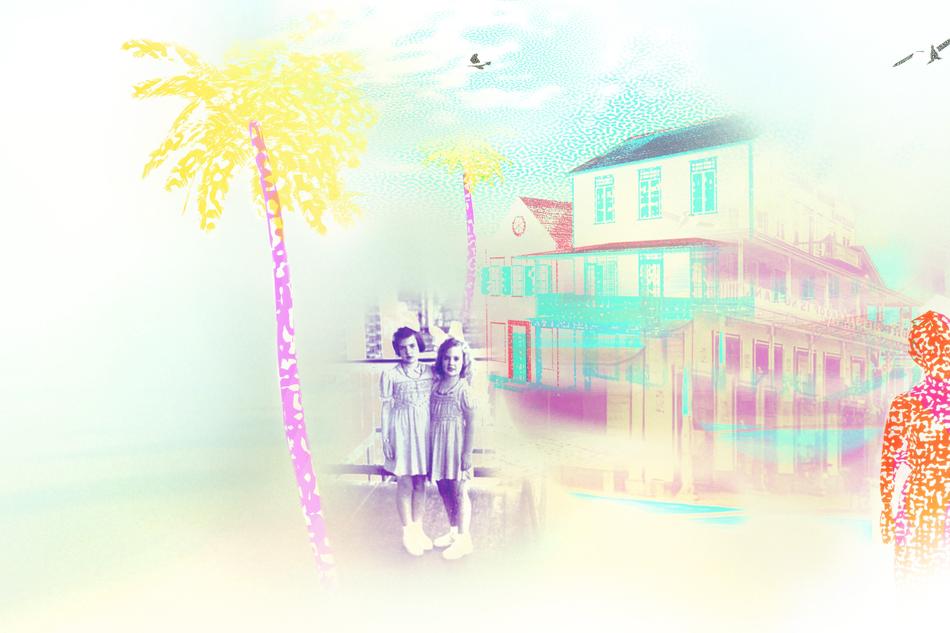
In the emotional journey that follows de Lange, viewers accompany her through skewed memories, elusive images and re-imaginations towards one moment of loss and grief during the Second World War. The true story that leads viewers from Paramaribo to Amsterdam and into a psychiatric facility called Het Apeldoornsche Bosch.
Combining conversations with de Lange, mesmerizing 3D modelling animation and personal footage, the project explores who people are in relation to who they were. Meanwhile, viewers will find truth in imagination, beauty in the unknown and an act of unconditional love.
‘Lacuna’ was supported by DutchCultureUSA, a program of the Kingdom of the Netherlands in the United States. The XR experience, which was produced in the Netherlands, is presented in English, Dutch and Flemish with English subtitles.
‘Lacuna’ had its North American Premiere in the XR Experience Spotlight section of SXSW 2026. The experience was held between March 15-17 at the Fairmont Austin Hotel.
During the documentary’s North American Premiere last month, Wegdam and Huitenga Broeren generously took the time to sit down for an exclusive interview at the Fairmont Austin Hotel. Among other things, the filmmakers discussed why they chose the XR format to immerse viewers in the emotional experience of lost memories, and how they used sound and abstract visuals to convey absence and recollection.
Film Factual (FF): You worked together on the new XR Experience documentary, ‘Lacuna.’ How did you come across Sonja de Lange’s story? What was the process of turning it into the project?
Maartje Wegdam (MW): The project began during research I was doing on objects that once belonged to Jewish people killed in World War II – items that were later found in people’s attics. During that research, I learned about three napkin rings that had been buried under a psychiatric ward and later returned to the family’s daughter.
When I contacted Sonia to learn more, she told me she didn’t actually know the full story because she lacked those memories. That’s when I realized the project wasn’t just about the objects, but about lost memories, trauma, and how events from 80 years ago still shape identity.
From there, we began conversations and interviews. That eventually led to the idea of creating it as a VR experience, even though I came from documentary filmmaking.
FF: What was it like collaborating as co-directors on the XR Experience?
MW: Initially, Nienke joined as a VR consultant to help shape how the story could work in that medium. But we quickly connected creatively and decided to co-direct.
The collaboration felt natural because we brought complementary strengths – technical expertise in VR and a strong narrative foundation from the interviews. We developed the concept together, taking time within the creative team to define our approach before involving Sonja more deeply.
Nienke Huitenga Broeren (NHB): I loved working with Maartje because the relationship she had with Sonja. The conversations that came out of their discussions are such good material to include in the film. Maartje’s question immediately brought up some ideas we could discuss.
We had a very comfortable start coming up with the approach and overall concept because we didn’t involve Sonja at every step. We first took it to our creative team, which gave us the time to figure out how we wanted to collaborate.
FF: Why did you decide to ell Sonja’s story in the XR format instead of a traditional documentary?
NHB: The interviews with Sonja felt very spatial – she described memories in a way that evoked physical environments and gaps. VR allowed us to create a space where audiences could physically experience the absence of memory and the effort of trying to retrieve it.
Unlike a traditional screen, VR lets you feel emptiness and presence more immersivity. That was essential to expressing the emotional core of the story.
FF: How did you both create the visuals for ‘Lacuna,’ particularly in terms of the cinematography?
NHB: We actually began with sound before visuals, building an immersive audio landscape that conveyed both memory and absence. From there, we developed visuals that matched different emotional states in Sonia’s life. Bright, detailed scenes reflected safer or happier moments, while darker, more abstract environments represented fear and uncertainty. We worked with multiple visual artists to give each emotional phase its own distinct style.
FF: Speaking of sound, how did you oth also craft the score and sound design for the project?
MW: We collaborated with a composer early on to explore what memory – and the absence of memory – might sound like. We experimented with tones, textures and abstract sound qualities to create something that sits between reality and imagination. The process was very exploratory, focusing on emotion and spatial feeling rather than traditional musical structure.
FF: How did you approach the editing process for ‘Lacuna?’
NHB: The editing began with a long version that we gradually shaped into a 33-minute experience. Sound played a central role early on, helping define pacing and structure. We went through several major iterations over about two years. We refined both the timeline and the spatial experience, since VR requires thinking about both narrative flow and physical interaction.
FF: ‘Lacuna?’ (had) its North American premiere at SXSW. What (was) it like presenting the XR Experience at the festival?
MW: It’s very exciting, especially as this is the U.S. premiere. The film deals with memory, loss and difficult historical periods, and those themes resonate differently today given the current global climate. It’s interesting to see how audiences connect with it now, compared to when we first started the project years ago.
 Film Factual