Oftentimes, what’s shocking or unnerving for one generation can, for another, not only come across as tame but even seem almost passé. Four decades on from its theatrical release, however, David Lynch’s subversive and voyeuristic neo-noir Blue Velvet still packs a punch, in no small part because the singularity of its vision and the commingled nature of its tones remain elusive, and open to multiple interpretations — none particularly reassuring.
The film stars Isabella Rossellini as Dorothy Vallens, a mysterious and vulnerable singer under the thumb of menacing, sexually abusive gangster Frank Booth (Dennis Hopper). When college student Jeffrey Beaumont (Kyle MacLachlan) returns to his small North Carolina hometown after his father suffers a stroke, he discovers a severed human ear in a field and in short order finds himself tumbling headlong into a world of roiling secrets, sexual perversion and incredible danger. Along with Sandy Williams (Laura Dern), the daughter of a local police detective, Jeffrey launches his own investigation in parallel, exposing the seedy underbelly of a seemingly idyllic American suburb.
In addition to rehabilitating Lynch’s image as a trailblazing auteur (he was just coming off the difficulty and commercial disappointment of Dune), and establishing MacLachlan (who would go on to anchor Twin Peaks just a couple years later) as Lynch’s most reliable onscreen alter ego, Blue Velvet also compellingly showcased the director’s love for music and his near-singular grasp of the power of sound and image. Specifically, the film launched composer Angelo Badalamenti’s long-running, highly influential creative partnership with Lynch — one that encompassed nearly all of the director’s future projects, including Wild at Heart (1990), The Straight Story (1999), Mulholland Drive (2001), and of course the aforementioned legendary TV series Twin Peaks, the theme for which earned the composer a Grammy Award and three Emmy nominations.
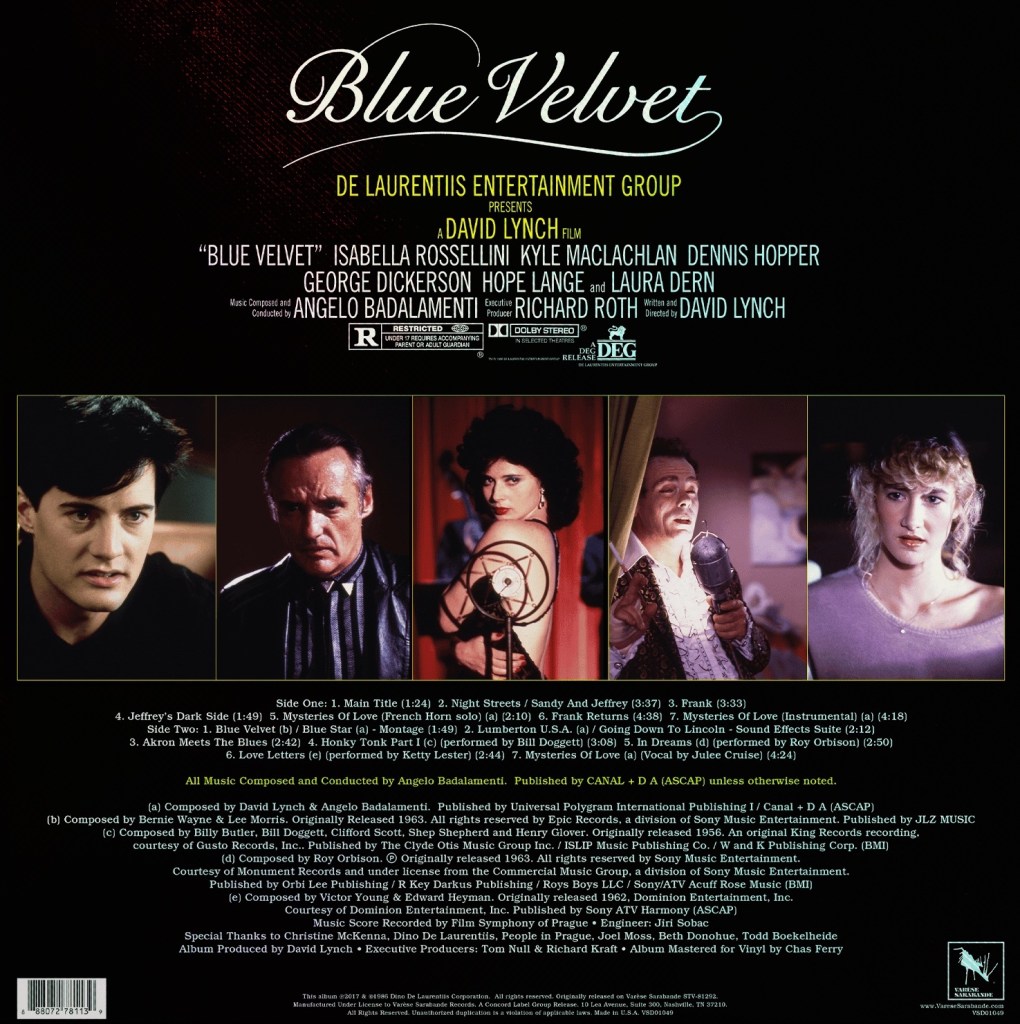
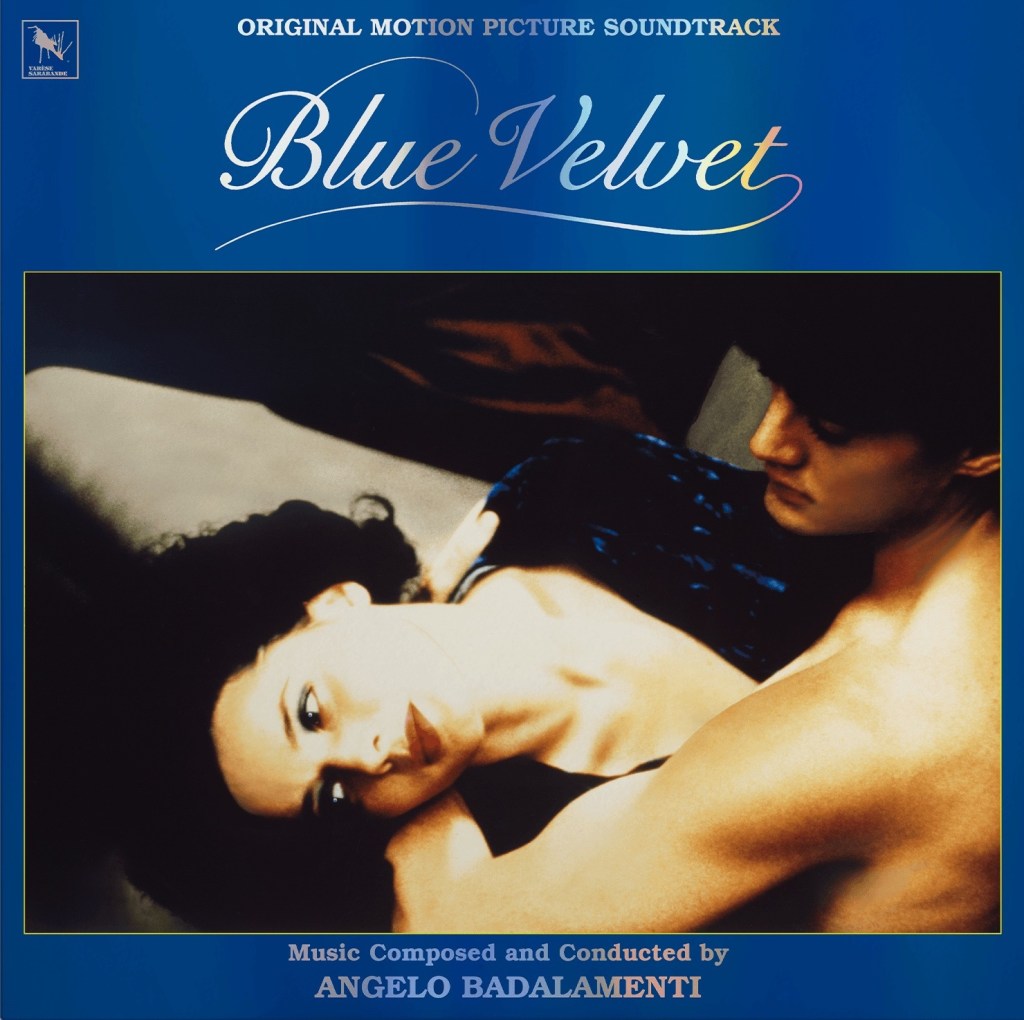
For fans of Lynch, Varèse Sarabande is celebrating the 40th anniversary of Blue Velvet with a reissue of its iconic soundtrack, on vinyl, digital and CD. Initially hired by Lynch only to serve as a voice coach to Rossellini, Badalamenti’s role expanded after plans to use This Mortal Coil’s rendition of “Song to the Siren” as the movie’s central theme proved too costly. Pivoting, and impressed by Badalamenti’s work with Rossellini, Lynch tasked Badalamenti with a project that would become a turning point in the latter’s career — composing, as Lynch put it, “a song that floats on the sea of time.” The result was “Mysteries of Love,” an ethereal piece performed by Julee Cruise, with lyrics penned by Lynch. Gobsmacked, Lynch then turned to Badalamenti to both compose and conduct the film’s atmospheric score (he would also cameo in the movie as the pianist at the Slow Club, where Vallens performs).
Among the few reference points Lynch gave Badalamenti was Dmitri Shostakovich’s “Symphony No. 15” — the Russian-born composer’s final symphony, written as he contemplated his own mortality, and blending playful, innocent motifs with more mournful, eerie arrangements. Blue Velvet’s unique and almost surrealist-tinged noir score reflects in no small way, then, the duality at the center of the movie’s thematic balancing act — juggling some of the comely exaggeration of midcentury lounge music with more unsettling orchestral melodies, music that hints at an encroaching darkness.
The tension of those contracting influences can be heard throughout the score, particularly in the haunting “Main Title” and “Night Streets/Sandy and Jeffrey,” which swings from foreboding to lighthearted. Also notable is the menacing “Frank,” inspired by the film’s psychopathic villain, and the moody “Akron Meets the Blues,” which adds a touch of classic jazz noir. It’s fun to hear the sound effects suite and “Logs, logs, logs!” radio jingle of “Lumberton U.S.A.,” powerful reminders of Lynch’s sincere affection for nostalgic Americana. Interspersed among Badalamenti’s instrumentals are a handful of 1960s pop tunes, including Roy Orbison’s ballad “In Dreams,” Ketty Lester’s rendition of “Love Letters,” and of course the song which gives the film its name, performed here by Rossellini.
Varèse Sarabande’s special reissue release presents the 14-track album in a rainbow foil jacket, with a complementary variety of limited-edition color pressings to satisfy hardcore LP collectors. Again, CD and digital options are also available — allowing for longtime Lynch fans and neophytes alike to aurally curate their own appreciative reflection. For more information on the vinyl release, click here.