
In a different, less clamorous and stupid timeline (or perhaps just a decade or so ago), Omaha, which premiered at the 2025 Sundance Film Festival in the U.S. Dramatic Competition section, might be the type of independent film to capture the attention of intelligent arthouse moviegoers, and enjoy a breakout theatrical run. At the very least, its respectful critical reception and embrace by the industry tastemaker set would guarantee debut director Cole Webley another bite of the occupational apple. As is, unfortunately, one can’t be too sure that Omaha (after a blink-and-you-missed-it theatrical run in the late spring, where it grossed under $200,000) will garner much in the way of career uptick for its major players. And that’s a shame, because there is a lot here to hold in esteem.
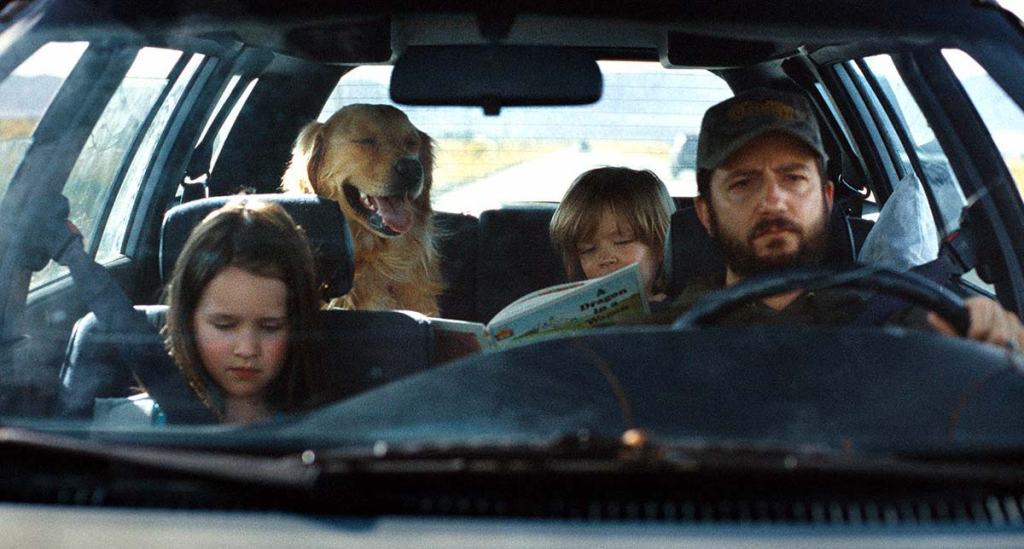
Working from a script by Robert Machoian, Webley’s movie centers on an unnamed Nevada father (John Magaro) who takes his two young children, Ella (Molly Belle Wright) and Charlie (Wyatt Solis), and the family dog Rex on a road trip to the titular Nebraska city after their home is foreclosed upon. He’s stressed out and emotionally constipated, but viewers don’t really know why, other than he’s obviously cash-strapped and at the end of a rope or two, psychologically speaking. When he makes the decision to drop off and leave Rex at an ASPCA shelter, it provides a clue that maybe something isn’t right. Still, the question lingers: what, exactly? What awaits the trio at their destination?
Contemporary American cinema — certainly mainstream studio fare, but also within the independent realm — is largely predicated on action, and Omaha is a decidedly humble exercise, keeping its narrative cards close to its chest and dealing back-foot drama without much in the way of cathartic payoff. There aren’t really any big, showy scenes here; instead, it’s a drip-drip-drip accumulation of pained moments and a distracted father’s forced connections with his kids, who he obviously loves but is struggling to provide with the necessary shelter and stability.
Magaro, who was excellent in Tim Fehlbaum’s recent Oscar- and Golden Globe-nominated September 5, is the perfect type of leading man for a movie like Omaha. A steady, respected supporting actor of almost two decades, perhaps best known for Orange Is the New Black and The Umbrella Academy, Magaro has a vaguely familiar visage and sympathetic eyes that can carry an audience along.
Debut director Webley ably keeps everyone dialed in and on the same page, tonally, and the movie’s cinematography, by Paul Meyers, is excellent. There is care and thought put into the film’s color palette, and what both its composed frames and the shades and shadows within those frames say about the emotional states of its characters.
In all honesty, Omaha was probably my second favorite main competition Sundance entry last year, behind multihyphenate Eva Victor’s excellent Sorry, Baby, and right up there with Rachael Abigail Holder’s Love, Brooklyn. (Instead, Atropia, which fumbles with its execution of a great concept, and grossed under $60,000 during its December run from Vertical Releasing, won the top prize.) The movie’s quiet payoff — in which both a bit more of the man’s backstory and the reasons for its terminus each come bubbling to the surface — provides some thought-provoking reflection, and may send inquisitive viewers down an affecting, search-related rabbit hole.
Essentially a melancholic dirge, Omaha is understandably not built for commercial capture on a streaming platform. But as the theatrical arthouse marketplace continues to contract, where do intimate, well-crafted statements of the difficulties of on-the-margins contemporary life like this go?
Omaha comes to DVD in a standard Amaray case, presented in a 1.85:1 aspect ratio, with 5.1 surround sound and 2.0 stereo audio tracks, as well as optional English SDH subtitles. It’s a shame there isn’t a filmmaker Q&A from Sundance or some other reflections from Webley, Magaro and Machoian to anchor a supplemental features slate.
 Film Factual