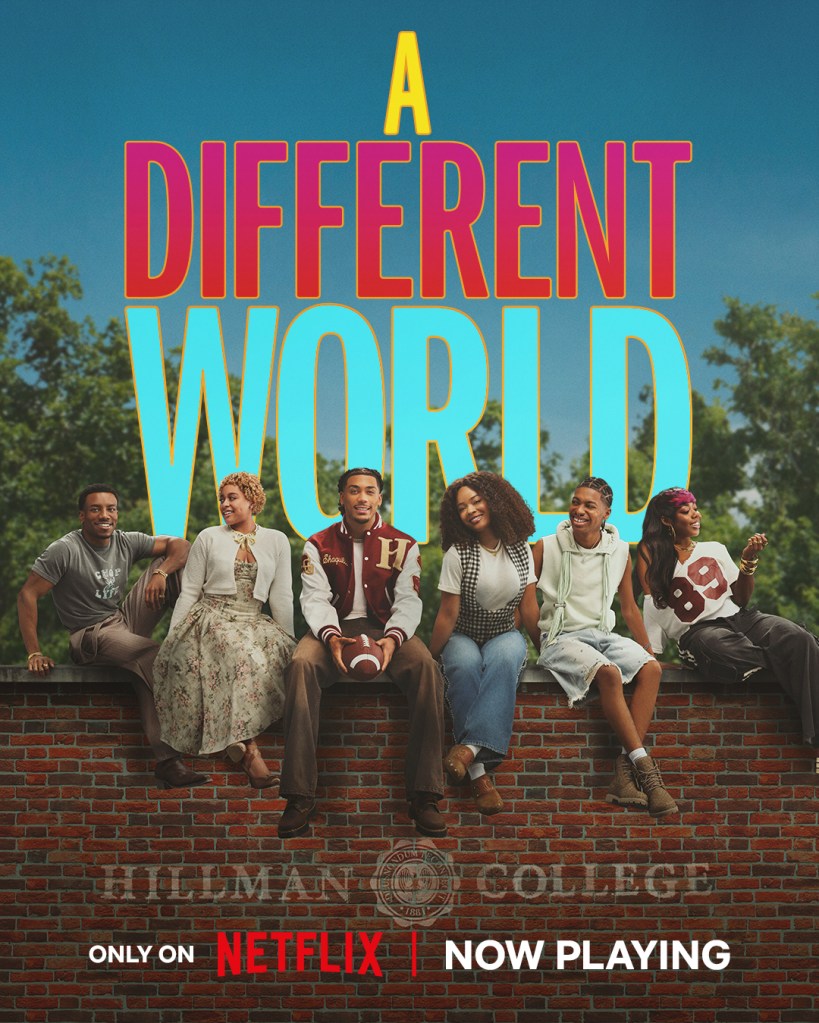
Navigating the challenges of finding their own identity and purpose is a transformative experience for many college students, especially those who follow in their parents’ paths. That’s certainly true for the latest generation of legacy students at the fictional HBCU Hillman College of the new show, ‘A Different World.’
The Netflix reboot revisits the beloved universe of the original 1980s-90s NBC series. The updated series also examines the complexities of young adults embracing their individuality in the modern era.
The first season of ‘A Different World’ features 10 half-hour episodes that were shot in the single camera format. Cinematographer Shawn Peters, who’s recognized for his commercial, narrative and documentary projects, shot the comedy.
Throughout the revival’s first season, Peters worked with creator, showrunner and executive producer, Felicia Pride. He also collaborated with Emmy Award-winning executive producer and director, Debbie Allen, who also served as a producer and helmer on the original series.
Throughout ‘A Different World’s initial season, Peters channeled the spirit and vision of Ernest Dickerson and Spike Lee to blend the show’s original style with his own personal flair. The transition from classic multi-cam to single-cam presented unique challenges, but the cinematographer and Allen, along with their lighting, grip and production teams, kept the original spirit alive while making the show feel fresh and contemporary.
Netflix’s ‘A Different World’ returns to Hillman College with a new class stepping onto campus – and beloved faces coming home. At the center is Deborah Wayne (Maleah Joi Moon), Whitley and Dwayne’s lovingly sheltered youngest daughter. She’s a free spirit with a flair for the spotlight and a big heart who’s still figuring out her own path at Hillman.
Along the way, Deborah’s joined by a new generation that reflects the breadth of Black life on campus: Rashida Duvall (Alijah Kai), a first‑gen criminal justice major; Shaquille Johnson (Cornell Young IV), a five‑star athlete choosing legacy; Amir Rodale (Jordan Aaron Hall), a sharp psychology major better at fixing everyone else’s problems than facing his own; Hazel Henry (Kennedi Reece), a church‑raised small‑town girl defining her own values; and Kojo Achebe (Chibuikem Uche), a Ghanaian‑Nigerian fashion entrepreneur finding the courage to follow his vision.
Legacy favorites also return, including Whitley Gilbert (Jasmine Guy), Dwayne Wayne (Kadeem Hardison), Freddie Brooks (Cree Summer) and Ron Johnson (Darryl M. Bell). Set against the rituals, humor and contradictions of an HBCU, ‘A Different World’ is centered on the richness and complexity of the Black experience.
Netflix renewed ‘A Different World’ for a second season after Season 1 premiered on September 24. The initial season debuted at #4 in the Global Top 10 English TV list, earning 4.2 million views.
‘A Different World’ Season 2 will follow Deborah and her Hillman classmates as they return to campus for sophomore year after a transformative summer. They all have a New Year, New Me attitude, only to find themselves faced with past decisions, uncertain futures, new loves and friendships, and deeper questions of purpose – all while getting themselves into a whole lot of new mess.
The day before Netflix renewed ‘A Different World’ for its sophomore season, Peters spoke over Zoom about his work as the cinematographer on the reboot’s first season. Among other things, he discussed collaborating with Allen to establish a cinematic, naturalistic visual style that honors the original series while introducing a fresh perspective. He also shared insights into his lighting techniques, vintage lenses, camera choices and the creative challenges of transitioning to a single-camera format.
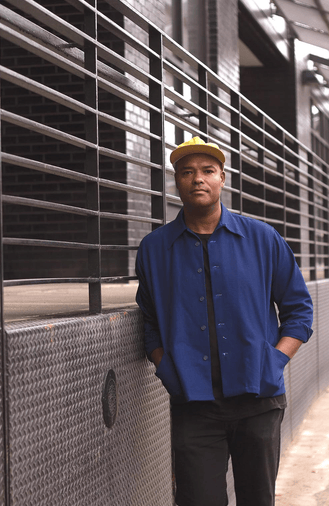
Film Factual (FF): You served as the cinematographer on Netflix’s new reboot of ‘A Different World.’ What interested you in serving as the Director of Photography on this new version of the show? How did you become attached to the new series?
Shawn Peters (SP): I went to an HBCU, and ‘A Different World’ was a major influence on me to make that choice. I went to Morehouse College, where part of the series was also shot.
I was brought onto the series at the request of Debbie Allen. We met on another series we worked on called ‘The Last Days of Ptolemy Gray’ for Apple TV+.
I didn’t interview for (‘A Different World’). She called me, and before I even read the script, she asked if I was interested. I said I would love to read the pilot script. I read it, we did the pilot, it got picked up and then we did the series.
FF: Speaking of Debbie Allen, what was it like working with her once filming began to establish the visual style for the reboot?
SP: I really wanted the series to be single-camera and more cinematic. Many of the references were films like ‘School Daze.’ She wanted the show to feel natural and immersive. She also wanted people to feel like they were there with the students.
That was our directive. So we worked together on the first episode to establish a blueprint for the rest of the season.
Pilots are the testing ground where you figure out what works and what doesn’t. It was a good experience. She’s an amazing, lovely woman.
FF: What was it like transitioning from the original series’ multicamera format to the single-camera approach for this iteration?
SP: I’ve never done multicamera before, so I didn’t have any experience with it. All the series I’ve worked on have been single-camera, so it was a natural fit for me.
The challenge was making it feel energetic. It’s a half-hour series, and many of us, including the showrunner, Felicia Pride, and Ms. Allen, come from longer-form television. I’ve never done a half-hour series before.
Our challenge was figuring out how to achieve a cinematic look while maintaining a faster pace. Some of the first edits were longer because our style involved longer shots that had more room to breathe. We had to edit them down.
If we do a second season and it remains a half-hour series, we’ll have to factor that in more effectively. (Note: Netflix announced the show’s renewal for a second season the day after this interview took place.)
FF: Coming from longer-form projects to a half-hour sitcom, how did you approach determining shot lengths and establishing the overall visual style?
SP: I knew I wanted to light the spaces as completely as possible so people could move freely within them. I tried to light everything naturally. If we were on a set, window light would motivate most of the lighting, with a few practical lights in the space.
If we were in a cafeteria, we had overhead lights. But if overhead lighting wasn’t necessary, I didn’t use it. I tried to make everything feel motivated by natural light or by sources that would realistically exist in the room. That approach gave us the freedom to move faster.
FF: How did your lighting setups influence the way you approached shooting and lighting each scene?
SP: The main thing was making everything feel as natural as possible, with lighting motivated by real sources. That helped establish the feeling, naturalism and contrast.
When people watch a series with a more cinematic feel, I recommend changing their TV settings. Many TVs are shipped with settings optimized for gaming, with a lot of backlight and motion smoothing at 60 frames per second.
I suggest going into the picture settings and looking for Movie or Filmmaker Mode. That will help you see what we actually did with the lighting.
FF: Much of this new series was shot on a soundstage. How did that influence your approach to shooting?
SP: Most of the interiors were on the soundstages. The crew built the sets.
The sets we used on campus were also very helpful. Classrooms and other spaces where we could use actual windows and existing features helped speed up the process.
I was still pushing light through windows and shaping the rooms in a similar way. Sometimes, though, you can’t replicate the real thing. The exteriors gave life to the show.
FF: How did the color schemes for the locations influence your approach to shooting? Was it important to know the color palette of the sets?
SP: Absolutely. We tried to coordinate everything as well as possible because the best-laid plans don’t always get executed.
During prep, the production designer, Bruton Jones, our costume designer, Provi Fulp, and I tried to work within a cohesive palette that complemented skin tones, costumes and wall colors while respecting the story. We collaborated to make everything work together visually.
FF: How did you give the revival its own unique visual style while paying tribute to the original? Was there a balance you wanted to create?
SP: The balance was making sure the colors were rich. I wanted a beautiful, warm, friendly, colorful aesthetic.
I wanted people to feel a sense of nostalgia. No one is going to remember the sets from 40 years ago or exactly how they looked. But they can experience that nostalgic feeling if the world feels welcoming and warm. That’s what I tried to do.
FF: As a cinematographer, how does nostalgia influence how you shoot projects like this revival? How did the original series help you create the visual style for the reboot?
SP: I didn’t use the original series so much as a reference. I used its energy and emotional warmth, but I didn’t really use it as an aesthetic reference. I used films as aesthetic references, like ‘Do the Right Thing.’
FF: What was it like working with the rest of the series’ crew, including the writing team and the directors? How did you collaborate behind the camera?
SP: It was a beautiful collaboration. One advantage we had with the directors was that many of the sets were built before we started shot-listing.
When the sets were available, we would go into the actual spaces and work out the shots. That gave us an opportunity to pre-block the scenes, determine what made sense for the story and where the actors would be, and then plan the lighting based on the blocking. That was our process.
FF: What was it like working with the cast and determining how to visually capture the actors as they interacted with one another?
SP: The cast was incredible. One lovely thing was how easily and quickly they bonded and became friends.
They were joking all the time and bonded easily with the crew and directors. It was one of the more joyous experiences I’ve had as a cinematographer.
FF: What was your experience working with Netflix on the series? How involved were they in the day-to-day filming?
SP: Netflix was very respectful and gave us a lot of grace. They were on set sometimes, though not every day, with a representative. I can’t tell you exactly how often because I was focused on my work.
The producers, showrunner and writers of each episode were always there.
It was a fun, family-like environment. Nothing stood out as adversarial. It was one of the most respectful and loving work experiences I’ve ever had.
FF: Were there any particular lenses or cameras that you found especially beneficial for Netflix’s ‘A Different World?’
SP: I went vintage with the lenses. ARRI Ultra Primes were my primary lenses, along with a few specialized lenses.
They were older lenses that I’d used earlier in my career, including Super Speeds and ARRI Ultra Primes. During the era when ‘School Daze’ was being made, lenses from Cooke and ARRI were commonly used. I wanted to return to that feeling: softer, less digital, less perfect glass. I was familiar and comfortable with those lenses.
For the cameras, I used ARRI 35s, which I also use frequently for commercials. I like their latitude and color science. I know how they interpret the lookup table I’ll use with my colorist and how that interacts with darker skin tones.
I used these cameras and lenses because I’m familiar with the technology. I didn’t want to introduce anything I wasn’t comfortable with. I used equipment I knew well.
FF: Beyond the color scheme, how did the sound, setting and score influence the visuals and camera work?
SP: We didn’t know the sound or score until later. Sometimes they played music on set, but it wasn’t necessarily the music that would be used in the show.
There was a singing sequence in which the cast performed a Tevin Campbell song live. That was the only time music was a definite part of the scene. Otherwise, I didn’t know the score or soundtrack until post-production, so I couldn’t say it influenced the visuals.
FF: The reboot moves between genres like romance, comedy and drama. Did that influence how you shot the different scenes?
SP: Absolutely. The world we created was so natural that we wanted everything to flow, whether a scene moved into comedy or drama. The transitions happened fluidly.
We couldn’t set up different lighting for every shift in tone. We had to let the scenes live naturally within the world we’d created.
Lensing was one way to make adjustments. If I knew there would be a comedic response to something, I might use a slightly wider lens or make another camera adjustment to enhance the comedic impact. That was more about lensing and camera position than lighting.
FF: Were there particular scenes where you broke away from your usual shooting style, or did you maintain one consistent visual approach throughout the series?
SP: We had some surreal sequences involving Deborah fantasizing about Ellington throughout the series. Those scenes were much more surreal in their approach.
We used the camera to reveal that he wasn’t actually there. We also used a gold motif behind him to signal that the scenes were fantasies.
Club scenes were another opportunity to be more expressive with lighting. We used those scenes to move away from realism into a more stylized world.
FF: During editing, did you get to see episodes before the show premiered? Did you have to go back and reshoot anything?
SP: I got to see the episodes once we colored them. We didn’t do any major reshoots, although we did a couple for the pilot. We shot quite a bit for the pilot, but after that, everything stayed as it was.
I got to see the edited episodes without sound while coloring them with the colorist. That was the only time I saw them.
FF: What has it been like to hear audience reactions now that ‘A Differed World’ has premiered on Netflix?
SP: It’s been nice. I try to stay off the internet a little because it can be exhausting. Sometimes I go on Threads and see what people are saying, and the response seems overwhelmingly positive. People seem to really love the show.
Most of the other shows I’ve worked on, like ‘The Last Days of Ptolemy Gray,’ ‘Random Acts of Flyness’ and ‘Amber Ocean Park,’ haven’t reached as many people in my family. Some of my family members watched ‘The Last Days of Ptolemy Gray,’ but they definitely didn’t watch ‘Random Acts of Flyness.’
I’m from a working-class family, and everyone I know in my family is watching this show. That’s meaningful to me.