Sometimes the seemingly most dangerous decisions can ultimately prove to be the most rewarding life experiences. The new documentary, ‘The Greatest of These,’ emphasizes protagonist Bruce Deel’s bold belief that every person deserves dignity, an opportunity and someone who believes in them, even in the most perilous neighorhoods.
Emmy-winning director Nick Nanton helmed the movie, which was produced by Katie Tschopp. Abundance Studios and DNA Films will premiere the feature tomorrow, April 17 on Amazon Prime Video, AppleTV and Documentary+.
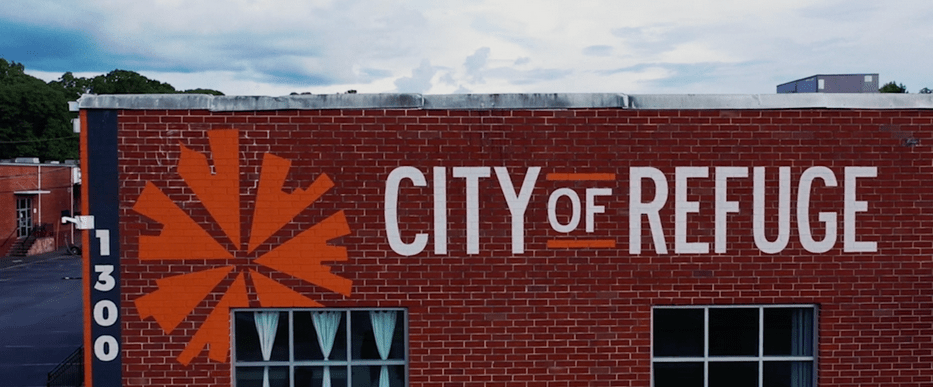
‘The Greatest of These’ is presented by City of Refuge, a faith-based nonprofit that was founded by Bruce Deel and has served more than 50,000 individuals since 1997. The movie tells the remarkable story of Deel and his family after they made a life-altering decision. Deel, who works as a pastor, moved his family to live in one of the most dangerous areas in Atlanta almost three decades ago. His goal is to create a special haven helping families transition out of crisis and move toward stability and opportunity.
The movie also chronicles the mission of City of Refuge, a faith-based nonprofit that serves individuals facing some of life’s most difficult circumstances, including addiction, trafficking, incarceration and homelessness. Through an innovative approach grounded in dignity and trust, the organization offers pathways toward healing, stability and long-term transformation.
Nanton and Deel generously took he time recently to talk about making ‘The Greatest of These’ during an exclusive interview over Zoom. Among other things, the duo explained that the documentary was inspired by decades of impactful work with vulnerable communities and a desire to share real stories of transformation to inspire others.
For Deel, the story didn’t begin with a documentary. It began with a conviction.
Nearly 30 years ago, he moved his family into Atlanta’s inner city with a simple but profound goal: to create a place where people in crisis could find stability and hope. Over time, that vision grew into City of Refuge.
“We’ve been in the inner city of Atlanta for almost 29 years,” Deel explained. “With the thousands of stories we’ve encountered, we felt it was the right time to start sharing some of those successes.”
That sense of knowing when a story needs to be told became the foundation for the documentary. Deel emphasized that the intention was never self-promotion, but rather inspiration.
“We hope these stories inspire others to engage in meaningful work and invest in people who may not have had that support in their lives,” Deel added.
For Nanton, the journey into ‘The Greatest of These’ began with an introduction from a mutual connection. What he found in Deel’s work was something he felt compelled to amplify.
“When I see someone doing work like that, I want to use the tools I’ve been given to share it,” the director said.
But the film isn’t just about highlighting one man’s efforts. It’s also about reframing how audiences think about service and purpose.
“We don’t all have to do exactly what Bruce does,” he explains. “But we should each respond to what we’re called to do. I want to amplify stories like his so people realize there are different ways to make a difference.”
That philosophy shapes the tone of the movie. Rather than presenting Deel as a singular hero, the documentary opens the door for viewers to see themselves as potential participants in meaningful change – however that may look in their own lives.
While many filmmakers rely heavily on research during pre-production, Nanton took a more immersive approach. He did read Deel’s book, but he quickly realized that the true essence of City of Refuge couldn’t be captured on the page alone.
“Seeing it in person is far more impactful than reading about it,” he says.
The experience had a personal impact as well. Nanton describes the process as transformative, particularly in how it reshaped his ability to connect with others.
“I became a better human through the process,” the helmer noted. “Especially in learning to connect with people I might have previously overlooked.”
That sense of growth behind the camera mirrors the transformation happening on screen. The parallel gives the movie an added layer of authenticity.
One of the biggest challenges in making ‘The Greatest of These’ was deciding which stories to tell. With thousands of individuals impacted by City of Refuge, narrowing the focus required careful thought.
“We had to choose five stories that showed different journeys from crisis to transformation,” Deel explained.
The goal wasn’t just representation, but responsibility. Both Deel and Nanton were deeply committed to ensuring that the individuals featured in the movie were portrayed with dignity.
“It was important to present these stories without exploiting anyone,” Deel says. “We wanted to elevate people and show what’s possible.”
For Nanton, that meant navigating the delicate balance between storytelling and ethics.
“We wanted to make sure people were ready and willing to share their stories,” he said. “It wasn’t just about making a good film – it had to be meaningful for them as well.
That emphasis on respect carried through every stage of production, particularly in how the stories were structured.
Instead of beginning with the most traumatic moments, the documentary introduces audiences to where individuals are now—stable, hopeful and moving forward—before revealing the challenges they’ve overcome.
“Starting with where people are now was important,” Deel explains. “That approach helped set the tone and emphasized transformation.”
For Nanton, the guiding principle was simple: integrity. “You can edit a story many ways,” he said. “But our goal was to lift people up while staying honest.”
By following the example set by City of Refuge itself, the filmmaking team ensured that the feature didn’t just talk about dignity – it embodied it.
When it came to shaping the final version of the movie, Nanton relied heavily on his editing team. While he gathered the material and established the vision, the detailed work of crafting the narrative was a collaborative effort.
“I gather the story and hand it over to them with a clear vision,” the filmmaker said. “We reviewed early cuts and made adjustments to stay true to the heart of the story.”
That collaborative spirit extended beyond the editing room. For Nanton, directing the documentary was as much about learning as it was about leading.
“This experience exposed me to parts of humanity I hadn’t engaged with before,” the director said. “It was both joyful and heartbreaking.”
For Deel, allowing a documentary crew into the world of City of Refuge required a level of trust. He admits that he had previously been approached by filmmakers but declined, concerned about how the story might be told. “We wanted our story to be told with faith, dignity and integrity,” he said.
With Nanton’s team, he found that alignment. “It was meaningful to see our work presented this way,” Deel added, noting that the experience was a departure from his usual way of sharing stories through speaking engagements.
But Deel began to feel that the filmmaking process didn’t distract from the organization’s work – it enhanced it. “At first, I was concerned it would take time away,” he admitted. “But it actually created opportunities for deeper conversations.”
Participants in the documentary embraced the chance to share their experiences. They often revealed a level of honesty and vulnerability that reinforced Deel’s belief in the importance of giving people a platform. “They may surprise you,” he said.
With its release set across major digital platforms, ‘The Greatest of These’ is positioned to reach a wide audience. For Nanton, that accessibility is key.
“Our goal isn’t just commercial success,” the director said. “It’s to create films that inspire and educate.”
Even a single viewer moved to action would make the project worthwhile in Nanton’s opinion. Although he hopes the impact will be far broader.
Deel shares a similarly focused vision for the film’s release. “I have two goals,” he said. “First, to inspire people to believe they can make a difference, even in small ways. Second, to reach people in crisis and show them that help is available.”
Ultimately, ‘The Greatest of These’ is not just a documentary, it’s an invitation. It asks viewers to reconsider what’s possible when people are met with compassion instead of judgment, and support instead of indifference.
Deel’s decision to move into a struggling neighborhood may have seemed risky at the time. But as the film makes clear, the most meaningful change often begins with a willingness to step into the unknown.
Sometimes, the greatest impact comes from a simple belief: that every person, no matter their circumstances, is worth investing in.