The public may only learn the truths behind political crisis by understanding perspectives that are silenced by society. The new political documentary, ‘Far From Maine,’ shows that this lesson has never been as important as it is in this time of genocide.
Award-winning filmmaker Roy Cohen, who’s based in Tel Aviv, wrote and directed the feature. The Arab-Jewish journalist is also a long-time activist who openly shares his feelings against the occupation. He made the movie because his support for justice and equality inspired him to bring his beliefs and experiences to the screen.
The documentary, which is in English, Hebrew and Arabic, is an international co-production between France, Italy, Hungary, Denmark, Norway and Switzerland. It has never accepted any Israeli (or other Middle Eastern) investment, public or private.
Serge Gordey served as a producer, and Jack Pearkes served as an executive producer, on the film. Besides Cohen, the documentary also features Tobias Samuel Stein, Alia Viviane Stein Cohen, Haifa Staiti, Yousef Bashir, Shurouq Swaiti, Nathalie Bloch and Galit Nir.
Cohen is an Arab-Jewish, queer Israeli filmmaker and long-time activist against the occupation. At the heart of ‘Far from Maine’ is his enduring bond with Aseel Asleh, a Palestinian friend he met as a teenager at a peace camp in Maine. Their friendship, rooted in political engagement and a shared belief in coexistence based on justice and equality, shaped both of their early lives.
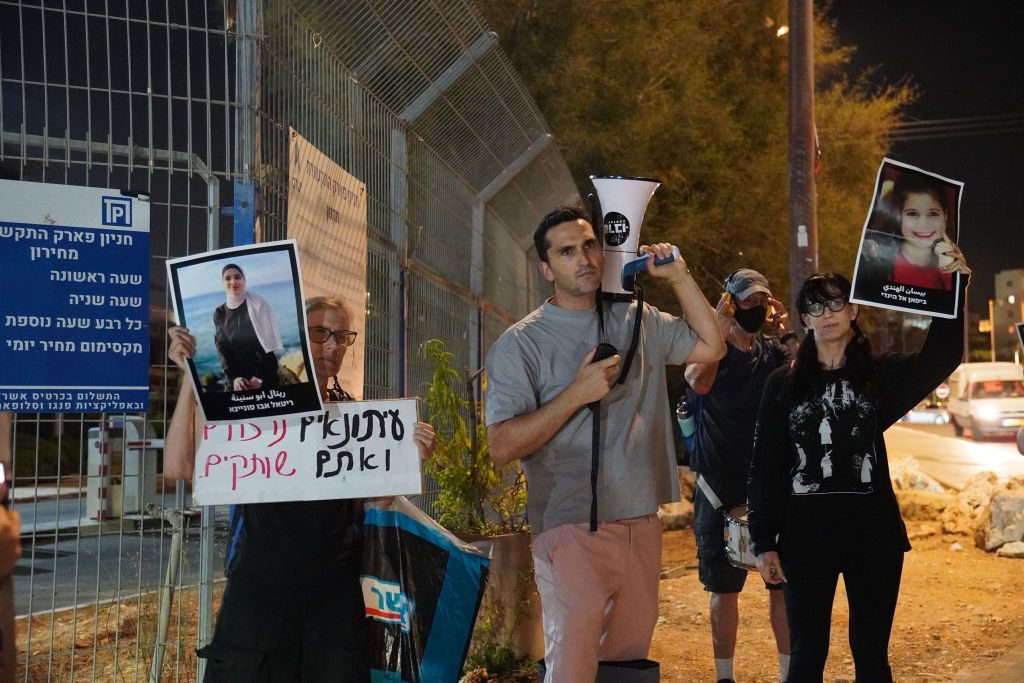
In 2000, that friendship was violently severed when Asleh was shot dead by Israeli police during protests in Jerusalem. His death went largely unacknowledged in Israeli society, leaving Roy with lingering trauma and unresolved questions about loyalty to their friendship, memory, and the country he lived in.
Decades later, as violence escalates and the genocide in Gaza unfolds, Coehn confronts this past through a cinematic letter addressed directly to Aseel. The film moves fluidly between archival material, reflections on the Maine peace camp, and present-day encounters with friends, activists, and thinkers, creating a dialogue across time. It examines how personal loss intersects with collective violence, and how memory can become a way for holding space for truth in a dark time.
‘Far From Maine’ will have its North American Premiere in the Pink Peach section of the 50th Annual Atlanta Film Festival (ATLFF 50). The screening will take place this Saturday, Mary 2 2026 at 2:00pm E at the Tara Theatre’s Jack Auditorium. In honor of the documentary’s screening at ATLFF, Cohen generously took the time yesterday to talk about making the feature during an exclusive interview over Zoom.
Film Factual (FF): You wrote the script for the new political documentary, ‘Far From Heaven.’ What inspired you to make the film?
Roy Cohen (RC): The project really began when my partner and I moved back to Israel in 2019 after I had lived in the U.S. for several years. I started thinking about what I wanted to say, and it centered on returning to the place where Aseel was murdered by police, but none of the shooters were tried. I was asking myself what it means to live in that place. It brought up questions about friendship, guilt and complicity – just existing within Israeli society. That became the starting engine for the film.
It evolved a lot from there. At first, I was hesitant because making such a personal film and involving my family was scary. It wasn’t a pleasant experience initially, but I had strong creative and production partners who saw the value in that approach and encouraged me. That’s how the film came about.
FF: You also served as the director on the movie. How did you approach helming the documentary once production began?
RC: In indie documentaries, you’re often both the producer and the director. At first, it was about convincing myself that there was an interesting story there. I began working with a cinematographer early on, and later collaborated with other creative partners who helped shape the project before October 7, 2023.
A big part of the process was finding the right collaborators who made me feel comfortable telling such a personal story. Once I got used to being both a director and a character in the film, I became more ambitious with the filmmaking and started developing a cinematic language.
The project also became an international co-production because we chose not to take Israeli funding. We partnered with producers from Europe and worked with international cinematographers and crew, which helped shape what the film ultimately became.
FF: How did you approach collaborating with ‘Far From Maine’s producers and securing the funding together?
RC: I first pitched the film at a documentary forum in Tel Aviv called COPO, where I met one of my producers, Sergei, who had worked on ‘Five Broken Cameras.’ His experience and personality really stood out, and we began working together.
From there, we took the film to other pitching platforms like Thessaloniki Film Festival, CPH: DOX, and Film Independent’s Fast Track program. Through those, we found additional co-producers.
In European co-productions, each producer typically secures funding from their own country. We were fortunate that the story resonated across six different countries. Our producers were the first people to believe in the film and advocate for it locally. The infrastructure of these pitching forums was incredibly helpful.
FF: Leandro Monti, Zvi Landsman and Greg Harriott served as the cinematographers on the film. How did you decide which visual style to incorporate into the movie?
RC: The film’s visual DNA started with early collaborations with my cinematographer and creative team. One of the core ideas was a shot that begins with one image and gradually reveals more, changing its meaning over time. That reflects my experience of living in Israel – things aren’t always what they seem at first.
I didn’t focus on technical details like lenses when working with cinematographers. Instead, I communicated ideas and intentions. We discussed what I wanted to convey and how to approach it visually.
I was also a subject in the film. So I had to trust the cinematographers completely since I couldn’t monitor everything while being filmed. That trust was essential to executing the vision.
FF: ‘Far From Heaven’ also features Tobias Samuel Stein, Alia Viviane Stein Cohen, Haifa Staiti, Yousef Bashir, Shurouq Swaiti and Nathalie Bloch. How did you decide who to include in the film?
RC: I focused on people who had an emotional connection to me or the story. That didn’t necessarily mean positive relationships – some were quite difficult.
For example, one participant had a very different and critical perspective shaped by bias and past experiences. I wanted that complexity in the film. So I included family, friends and people from different backgrounds, including Palestinians and Israelis.
The goal wasn’t to create an informative, talking-head documentary, but something emotionally immersive. I want viewers to feel what it’s like to live in that environment.
FF: The movie’s title, ‘Far From Maine,’ reflects on your experience at the peace camp in the titular sate. How did the camp influence the film’s story arc?
RC: The title ‘Far From Maine’ has multiple meanings. Maine represents both a physical place and an idea. That idea focusses on what we once believed was possible through programs like Seeds of Peace.
Aseel, who was killed at 17, strongly believed in that vision and wrote about it often. His letters are tied to that idea of Maine, which became frozen in time after his death.
We also used archival footage from the camp, which had a strong media presence. Returning to Maine later, we found the camp abandoned, which added another layer of meaning.
Maine became a metaphor for hope, belief and what could have been. The film asks questions rather than giving answers, including how far we have come from that idea, and how much further can we go?
FF: Valentina Cicogna edited the movie. How did you work together to put the final version of the documentary together?
RC: We participated in a post-production workshop called Doc Incubator in Prague. It’s designed to help filmmakers refine how their creative decisions translate to audiences.
That’s where I met Valentina. What stood out about her was her empathy – she understood and cared about me as a character even more than I did at times.
Her perspective as an outsider was crucial. She didn’t have the same proximity to the conflict, which allowed her to ask important questions and ensure the story was accessible to international audiences.
Post-production was also when the co-production aspect really came together. Different parts of the process, like color and composition, were done across various countries, and my producers’ input became more prominent.
FF: ‘Far From Maine’ will have its North American Premiere at the Atlanta Film Festival this Saturday, May 2. What does it mean to you that the documentary will be shared with audiences here in the U.S.?
RC: I was very excited when the Atlanta Film Festival selected the film. It’s a complex and emotionally charged story, and I’m hoping audiences will connect with its human aspects, regardless of their political views.
The film is about the complications people face – love, disagreement, family and memory. There’s something universal in that, and I hope audiences will resonate with it.
FF: After the movie’s screening at ATLFF, how will you release the film?
RC: We have more festivals lined up, though I can’t announce them yet. We’re planning screenings across the U.S. and working with communities and organizations focused on Israel-Palestine issues.
Right now, we’re balancing festival strategy and future screenings. So there are definitely exciting things ahead!