
For the families featured in the new documentary ‘4000 Days,’ sharing their stories was never about revisiting unimaginable loss. It was about ensuring that the deaths of their children lead to meaningful change.
Emmy Award-winning filmmaker Daniel E Catullo III wrote, directed and produced the feature. The biographical movie features the experiences of the Burch, Oakes and DeVercelly families, whose lives were forever altered by hazing-related tragedies and the activism that followed. Through, the film examines both the devastating human cost of hazing and the ongoing effort to make college campuses safer.
‘4000 Days’ chronicles how the three families began a relentless public fight for change after losing their sons to fraternity hazing. They decide to turn their personal tragedies into a movement. Refusing to accept that their children died in vain, they join together in waging a multi-year battle to expose an entrenched system mired in denial and secrecy, challenging both the fraternities and universities to be held accountable.
The movie, whose title representing the number of days it took to turn grief into action and law, captures the family’s journeys. From intimate personal moments to painful court appearances, the documentary tells a story not just about loss, but also one of resilience, undying determination and the power of ordinary people to turn tragedy into lasting impact.
‘4000 Days’ will have its World Premiere in the Spotlight Documentary section of this year’s Tribeca Festival. The film’s premiere screening will be held this Wednesday, June 10 at 5:30pm ET at the Village East by Angelika theater in New York City. To help promote the movie, Eric Oakes, Linda Oakes, TJ Burch and Kim Burch generously took the time recently to talk about appearing in the project.
For TJ and Kim Burch, whose son Nolan died at West Virginia University, participating in the documentary felt like a natural extension of the work they have been doing for years.
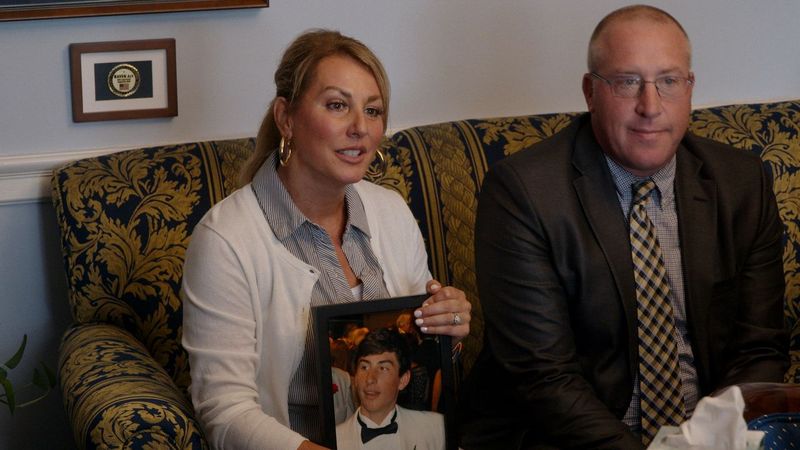
“We’ve known Dan Catullo for a long time,” TJ said. “After Nolan passed away, we partnered with Dan and West Virginia University on educational materials that are now used in high schools and colleges. We had footage from that night and other materials that we felt needed to be used for something positive – something that could save lives.”
The Burches became involved in hazing prevention efforts alongside other families who had experienced similar losses, including the DeVercelly family. When Catullo began developing ‘4000 Days’ they all immediately supported the project.
“We wanted to get the word out about how dangerous hazing is,” TJ explained. “These kids should all still be here today. If somebody had simply made a phone call and done the right thing, Nolan would still be here. If parents had more transparency into what these organizations were doing, campuses would be safer.”
Kim says trust played a major role in their decision to participate. “Dan already told Nolan’s story in ‘Breathe, Nolan, Breathe,’ so there was never any hesitation,” she said. “We’re all like a family now – the other families, Dan, everyone involved. We knew he would handle these stories with care, and we knew the goal was the same: saving lives.”
That trust was shared by Eric and Linda Oakes, whose son Adam died in a hazing incident while attending college.
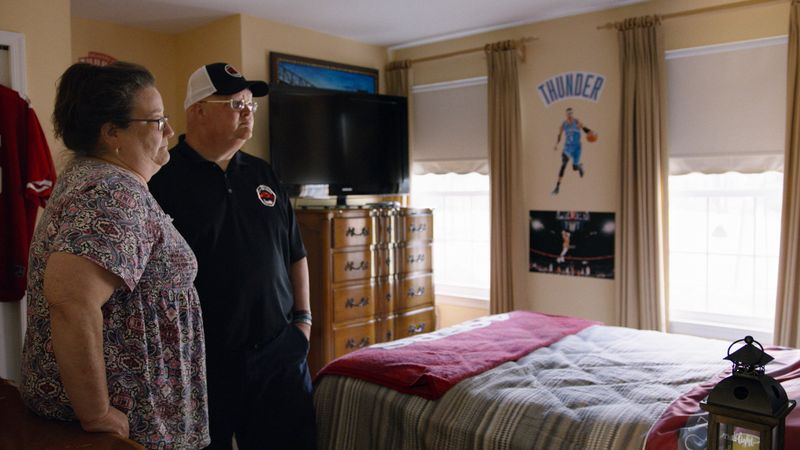
“We were approached by Dan early on, and he wanted to show the struggles families continue to face after these tragedies,” Eric said. “Unfortunately, the problem hasn’t gotten better over the years – d ’s gotten worse. We knew the work we were doing needed to reach a wider audience, and film is a powerful way to bring awareness to what’s happening on campuses.”
Linda recalled being convinced after seeing ‘Death of a Pledge: The Adam Oakes Story,’ the 2023 short Catullo created about their family.
“I was all in after that,” Oakes said. “The video was so impactful that I thought, if he can do that with a short piece, imagine what he can do with a feature documentary.”
Both families describe Catullo not simply as a filmmaker, but as a trusted partner in preserving their children’s legacies.
“You wouldn’t hand your child’s story over to just anybody,” TJ said. “You have to trust that the person telling it is going to do it for the right reasons and present it the right way. Dan understands that these kids’ lives mattered and that their stories need to lead to change.”
Kim agreed, noting that Catullo’s compassion made the filmmaking process easier. “He understands what we’re feeling,” she said. “He’s just as invested in these stories as we are. That makes all the difference.”
Eric said Catullo’s personal connection to Greek life also gave him a unique perspective. “As a former fraternity member, he’s deeply concerned about what’s happening within the system,” Eric said. “He wants to see major change. There are tens of thousands of students experiencing hazing every year – in fraternities, sororities, athletics, clubs and bands. Many carry that trauma with them for the rest of their lives. It’s important to keep spreading the message: stop hazing.”
The families have also found strength in one another. Over the years, the Burches have connected with numerous families affected by hazing tragedies through advocacy work and legislative efforts. They first met the DeVercelly family nearly a decade ago while working on anti-hazing initiatives and have continued to collaborate on awareness campaigns across the country.
Kim said there’s a unique bond among parents who have experienced this kind of loss. “When we walk into a room together, we don’t have to say anything,” she said. “You just hug each other and know exactly what the other person is feeling. It’s heartbreaking that we met this way, but at the same time, you’re grateful not to feel alone.”
At its core, ‘4000 Days’ is designed to educate – not only students, but entire families. “Most parents would never imagine that their child’s life could be in danger because they joined a fraternity, sorority or campus club,” Eric said. “We want people to understand what’s happening and learn more about the risks.”
Linda hopes audiences take away more than just information after they watch the movie. “I hope people really listen,” she said. “Too often people watch something and move on to the next thing. This is real. These incidents happen on campuses all across the country. This isn’t an isolated problem.”
For Kim, one of the documentary’s greatest achievements is ensuring that the young men at the center of these stories are remembered. “My biggest fear has always been people forgetting Nolan,” she said. “I don’t want him to become a statistic or a name in a book. Seeing these boys on the screen matters because it reminds people who they were. It’s about honoring them while also helping save lives.”
The film also highlights the advocacy work that followed these tragedies. For the Oakes family, Adam’s legacy lives on through legislation designed to protect future students.
After Adam’s death, the family became heavily involved in efforts to strengthen anti-hazing laws. Those efforts eventually contributed to broader reforms, including the Stop Campus Hazing Act.
“Adam was always somebody who protected people,” Eric said. “His friends tell us stories about how he was always looking out for them. That’s why we feel like he’s been guiding us through this work. Everything we’ve accomplished has been about protecting others, and that’s exactly who Adam was.”
The movie’s world premiere at the Tribeca Festival represents a major milestone for everyone involved.
“We’re still pinching ourselves,” Eric said “It doesn’t feel real. We’re incredibly grateful for the opportunity and hopeful that audiences will understand the movement we’re trying to build—one that’s about treating people better, caring for one another and creating real change.”
TJ believes the documentary’s message deserves the widest audience possible. “This story needs to be told,” he says. “We’re proud of Dan, proud of the film and grateful for everything he’s done to help combat hazing. Having friends, family and supporters there for the premiere means a lot. It feels like our entire community is coming with us.”
For both families, the ultimate measure of success won’t be festival accolades or critical acclaim. It will be whether the film sparks conversations, changes behavior and prevents another family from experiencing the same heartbreak.
As ‘4000 Days’ arrives at Tribeca, that remains the mission shared by everyone involved: to honor the lives that were lost by helping protect the lives that can still be saved.

